My regular reader will probably know that I am something of a history buff; not quite in Ana's league, I would happily concede; more of an enthusiastic amateur with an abiding interest in the history of medieval England, which is why this story from last Friday's Times (I've been a bit busy lately!) caught my eye.
I'm sure many of you will have read or heard about the new research, suggesting that the Battle of Bosworth Field, fought in 1485, actually took place a couple of miles from the location in which it was previously believed to have occurred.
So far, so good: despite the fact that the battlefield visitor centre was built in the 'wrong' place, it is still close enough to be of service and in some ways, doesn't actually sully the ground on which our last Plantagenet king, Richard III, lost his life and his crown to the future Henry VII.
But what I found particularly thought provoking about Ben Hoyle's article (I can only assume he is not an historian -he is billed as the paper's Arts correspondent) is the content of this paragraph:
In those few frenzied moments the future of England — and by extension much of the world — changed course. Bosworth became the bridge that links the Middle Ages to modern Britain and ushered in the dynasty of Henry VIII and Elizabeth I. If Richard had killed Henry there might have been no English Reformation, no Church of England and no Elizabethan golden age to inspire artists, explorers and empire builders.
Yes, in those few moments, the future of England changed; the dynasty that had provide the country with fourteen kings in an unbroken chain from 1154 until that moment, was unseated and a new one, the Tudors, took their throne; that much is unarguable. It is the suggestion of inevitability contained in the sentence "If Richard had killed Henry there might have been no English Reformation and no Elizabethan golden age to inspire artists, explorers and empire builders."
Did Richard's defeat, deposition and death really inevitably lead to those eventualities? Or, is all history - including this section of it - essentially the outcome of a series of sometimes random, often unplanned and unforeseeable events?
Let me use the accession of the Tudors and their developing history to illustrate my point.
As many of you will know, the future Henry VIII was not his father's eldest son and was not, therefore, born to be king. That role initially went to his elder brother, Arthur, Prince of Wales, who died aged only fifteen in 1502, seven years before his father. Arthur was (famously and subsequently) married to Catherine of Aragon, who was to become his younger brother Henry's wife after his death.
Imagine, as was entirely possible, that Arthur had lived to maturity and that he and Catherine had produced children. The man we now know as Henry VIII would never have become king and would have been known to history as a mere royal duke; a footnote at the bottom of a page.
Continuing that thought process, had Arthur not died prematurely and he and Catherine had produced children, there would have been no split with Rome (at least when it actually happened), England would have remained as it had hitherto always been: firmly and devoutly Roman Catholic and the Dissolution of the Monasteries may have been unheard of even today.
So much for inevitability.
But Arthur did die, Henry did become king and went on to marry his brother's widow. Their union was blessed with only one surviving child, Mary (the future Mary I); but the couple also had a son, Henry, Duke of Cornwall, who catastrophically died aged less than two months in 1511.
Returning to the concepts of randomness versus inevitability, what if baby Henry had lived to become Henry IX of England? Given his obsession with securing a male heir, the very obsession which subsequently led to his divorce from Catherine and his cataclysmc split with Rome, is it not entirely likely that Henry VIII would have remained happily married to his first queen, as his son and heir grew up, married and had children himself?
Such an eventuality would have meant that Anne Boleyn may have never graced the pages of our national history, other than possibly becoming Countess of Northumberland. A similarly anonymous fate would have befallen Jane Seymour and as a consequence, neither the future Edward VI or, crucially, Elizabeth I, would have been born, still less occupy the Throne in their own rights.
I could go on; what if Mary had not died without issue from her marriage to Philip of Spain, what if Edward VI had lived to adulthood and had children - both eventualities would have meant that Elizabeth would never have ascended the Throne; but I think my point is made.
There is nothing inevitable about the course history takes; it is entirely random and subject to the vagaries of life, death and even human fertility.
I'm sure Ben Hoyle was only using his assertion as a convenient journalistic vehicle in order to illustrate the importance of the discovery of the real Bosorth Field and I am grateful to him for doing so, for prompting me to write this post.
By the way, can anyone else spot any similarities between this related story, also written by Ben Hoyle and published in the Times in September 2009 and the one which I link to above?
Cut and paste journalism in the Times? Perish the thought...
Saturday, February 20, 2010


Friday, February 19, 2010
Weather watch...

Whilst it might be a very pretty sight, this photograph, taken about fifty yards from my front door about 8.30 this morning serves to illustrate the sheer inaccuracy of our weather forecasting service, as provided by the Met Office.
During last night's local evening news programme, the weather forecast made no reference to the possibility of snow in the Ribble Valley, or anywhere else in Lancashire, for that matter, whilst the earlier national version warned of potentially heavy falls on the Eastern side of the country.
So, it was with weary resignation that I looked through the window an hour later and saw a scene more reminiscent of Ice Station Zebra, than a small corner of northern England.
However, my fundamental point is this; if the Met Office are really only providing us with what is little more than their best - and often inaccurate - guess as to what the weather is going to do, what is the point of spending so much money on it.
We'd be as well served going to the local wise woman and asking her to divine the forthcoming weather by a skilled examination of freshly slaughtered chicken intestines.
It is a nice picture, though...
The Telegraph on top form...
Monday, February 15, 2010
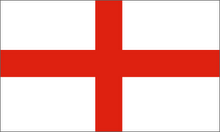
St George he was for England...

My regular reader will not be surprised to see me expressing my delight that the people of Darwen, a small market town in Lancashire (for the geographers and town planners amongst you, a classic example of ribbon-development) have decided to hold a week-long celebration to mark St George’s Day on and around 23rd April this year.
Here’s hoping that other towns and cities decide to do likewise and follow the example set by my fellow Lancastrians.
Here’s hoping that other towns and cities decide to do likewise and follow the example set by my fellow Lancastrians.
Friday, February 12, 2010
The Philistines of Sussex...

I have to confess that it was the headline of this article from today’s Daily Telegraph which first caught my eye and, as an historian, made my hackles rise, even if the article itself didn’t quite live up to its sensationalist billing.
Notwithstanding the fact that the article was mostly sizzle and very little sausage, it still concerns me greatly that Sussex University is proposing to withdraw from “research, and research-led teaching, in English social history before 1700 and the history of continental Europe before 1900”.
Unlike the seventeen Sussex-educated historians who wrote to the paper condemning the move, and the proposal to withdraw from the teaching of the history of continental Europe before 1900 in particular, however, I am more concerned with the suggestion that henceforth at that university 1700 will represent year zero as regards English social history.
I note at this point, that the article refers quite clearly to English social history and not its political cousin (my ‘discipline’, as it happens) and I take that reference to mean that the politcal history of England will still be researched, lectured on and taught there.
I certainly hope so, and I will return to my reason for saying so in due course.
However, returning to the original quote as to the university’s intentons, and at the risk of being accused of wanting the cake and the ha’penny, it would appear that henceforth, according to Sussex University, prior to the dawning of the twentieth century, nothing of any consequence occurred througout continental Europe.
Notwithstanding the fact that the article was mostly sizzle and very little sausage, it still concerns me greatly that Sussex University is proposing to withdraw from “research, and research-led teaching, in English social history before 1700 and the history of continental Europe before 1900”.
Unlike the seventeen Sussex-educated historians who wrote to the paper condemning the move, and the proposal to withdraw from the teaching of the history of continental Europe before 1900 in particular, however, I am more concerned with the suggestion that henceforth at that university 1700 will represent year zero as regards English social history.
I note at this point, that the article refers quite clearly to English social history and not its political cousin (my ‘discipline’, as it happens) and I take that reference to mean that the politcal history of England will still be researched, lectured on and taught there.
I certainly hope so, and I will return to my reason for saying so in due course.
However, returning to the original quote as to the university’s intentons, and at the risk of being accused of wanting the cake and the ha’penny, it would appear that henceforth, according to Sussex University, prior to the dawning of the twentieth century, nothing of any consequence occurred througout continental Europe.
By doing so, as the article suggests, they clearly think that events of such seminal importance as the French Revolution are not worthy of research or study.
Or, come to think of it any of the following, which I in list in no particular order, either chronological or as to my personal perception of their importance: The Napoleonic Wars, The Renaissance, The Thirty-Years War and the life and works of Martin Luther, one of the fathers of the Protestant Reformation, after whom the great American Civil Rights activist Martin Luther King - another towering figure - was named.*
I could go on, but shortage of prevents me from doing so; and in any event, I suspect my point is made: for a university history department to abandon the study of European (or indeed any history) before an arbitrary date - one which is, in historical terms, relatively recent - is to abandon the subject as a serious academic discipline, in direct contradiction of its raison d'etre.
Returning to the prospect of the university 'starting' English (social) history in 1700 (only seven years before England was subsumed into the kingdom of Great Britain by the passage of the Act of union with Scotland) is also, in my submission, to ignore the importance to that subject of a number of significant events in our political history.
I don't propose to link to these on the basis that a) my reader is more than likely to be already familiar with them or b) that in the event that they are not so familiar, but are still reading this increasingly lengthy piece, they will more than likely be sufficiently interested in the subjects I cite to research them separately.
That explanation aside, these are just some of the political events or processes occurring in England prior to 1700, which I suggest had a significant impact on our social history:
1. The Norman Conquest of 1066 - which essentially removed the old, Anglo-Saxon ruling class and replaced it with invading Normans.
2. The signing of the Magna Carta (which I reproduce in the picture above) by King John in 1215, enshrining a large number of the rights of which our current leaders are so assiduously stripping us, into English law.
3. The Great Plagues of the Fourteenth Century, which went a long way to ending feudalism.
4. The Civil War of 1642 - 1649, which saw England become a republic for the first (and hopefully only) time in its history.
Once again, I could go on; but again, I think I've made my point: English social history did not begin in 1700, and to pretend that events before that date are of insufficient relevance to warrant further study, is to abandon even the pretence of academic rigour.
Defending the university's stance, the deputy vice-chancellor, Professor Paul Layzell said: “The history degree at Sussex, as befits a programme offered by one of the top 20 departments in the country, will continue to be broad based and intellectually challenging.”
I would conclude with this observation, professor. I rather suspect that given the proposed vandalism you propose to inflict, your claim to be 'one of the top twenty [history] departments in the country', will soon be ringing somewhat hollow.
You should hang your head in shame.
* Forgive the continued links to Wikipedia; they simply provide the shortest thumbnail sketch of the events in question, for ease of reference.
Thursday, January 28, 2010
Kevin Myers and 'the English out of Ireland'...
Another post, another link to an article by Kevin Myers in the Irish Independent.
For once, I would take issue with some of his assertions - primarily written for an Irish audience as they may be. For instance, my regular reader cannot be unaware that this Englishman most definitely does take more than a passing interest in Irish history and Irish politics; I would, however, have to concede that I may be in something of a minority amongst my countrymen in that particular regard.
That said, I agree wholeheartedly that it is high time that we (in this instance the government of Britain, not England, as he deliberately misprepresents the case, presumably for effect) withdrew from any future role in the governance of the northern part of the island of Ireland.
I have been of that opinion for some time now, and I am in the process of formulating a post - probably quite a lengthy one, I suspect - to outline my position.
For once, I would take issue with some of his assertions - primarily written for an Irish audience as they may be. For instance, my regular reader cannot be unaware that this Englishman most definitely does take more than a passing interest in Irish history and Irish politics; I would, however, have to concede that I may be in something of a minority amongst my countrymen in that particular regard.
That said, I agree wholeheartedly that it is high time that we (in this instance the government of Britain, not England, as he deliberately misprepresents the case, presumably for effect) withdrew from any future role in the governance of the northern part of the island of Ireland.
I have been of that opinion for some time now, and I am in the process of formulating a post - probably quite a lengthy one, I suspect - to outline my position.
Sunday, January 17, 2010
Is that thing sharp?

Apologies for the even thinner than usual level of posting; I'm recuperating from what I like to describe as minor (and elective) abdominal surgery.
More when I can it at my keyboard a little longer...
Monday, January 11, 2010
Ali Dizaei: the high-stakes 'game' is afoot...
The 'game of high stakes' I wrote about here is now most definitely afoot.
I await developments in the case with interest...
I await developments in the case with interest...
Monday, January 04, 2010
Why Bolton, Owen?
I have to say, both as a football fan generally and a Lancastrian one in particular, that if it actually comes to pass, this story surprises me greatly.
Why on earth would Owen Coyle - an unqualified success as manager of Burnley, a club he steered into the Premier League last May - want to swap the hot seat at Turf Moor for the one at the Reebok Stadium as manager of Bolton Wanderers?
Whilst Bolton is a far bigger town than Burnley, the Trotters' (Bolton, to the uninititated) fan base is not much bigger than the Clarets', given the proximity to Bolton of the two giant Manchester clubs.
Furthermore, the Trotters are also in a worse league position than Burnley right now and therefore, theoretically at least, at greater risk of relegation to the Chumpionship.
More unusually still, it is widely known that following his success in returning Burnley to the top division of English football for the first time for more than thirty years, Coyle, a Glaswegian, was offered the manager's job at Celtic, an opportunity he turned down to guide the Clarets into the Premier League.
Let's just pause there for a minute.
Owen Coyle, a sensible, well-spoken, intelligent, tee-total Glaswegian Celtic fan turned down the chance to manage the club he supported as a boy, to remain loyal to Burnley. He chose to stay in Lancashire, battling against what were then (and still are) steep odds to keep a mill-town club with average home gates around the 20,000 mark, in the English Premier League, rather than assume command of one of the biggest clubs in these islands, with a virtual guarantee of Champions League football every year, to say nothing of Scottish League and cup titles and the unswerving loyalty of 55,000 fans every week.
Curious.
The only explanation I can come up with are that Burnley matched the salary on offer in Scotland, plus Coyle's commendable loyalty and his desire to compete week in and week out against the best teams in the country - not something on offer in Scotland, it has to be said. It might also be the case that as a relatively young man, he has a young family who are settled in their schools and together with his wife, he chose (sensibly) not to uproot them unnecessarily.
But why consider a move to Bolton, and why now?
Bolton, Burnley, Wigan and Blackburn Rovers, the four 'small' Lancashire Premier League clubs are all much of a muchness, it seems to me, in terms of their potential, although I did tip the Clarets for relegation at the start of the season.
Unless I'm missing something here, such as Burnley's chairman refusing to back him in the transfer market, or worse, planning for relegation, I can't see what a shrewd and excellent young manager like Owen Coyle has to gain by moving the twenty miles or so from Burnley to Bolton.
I suppose we may find out, if and when he holds his first press conference as manager of the Trotters, but until then, I'm scratching my head, frankly...
Why on earth would Owen Coyle - an unqualified success as manager of Burnley, a club he steered into the Premier League last May - want to swap the hot seat at Turf Moor for the one at the Reebok Stadium as manager of Bolton Wanderers?
Whilst Bolton is a far bigger town than Burnley, the Trotters' (Bolton, to the uninititated) fan base is not much bigger than the Clarets', given the proximity to Bolton of the two giant Manchester clubs.
Furthermore, the Trotters are also in a worse league position than Burnley right now and therefore, theoretically at least, at greater risk of relegation to the Chumpionship.
More unusually still, it is widely known that following his success in returning Burnley to the top division of English football for the first time for more than thirty years, Coyle, a Glaswegian, was offered the manager's job at Celtic, an opportunity he turned down to guide the Clarets into the Premier League.
Let's just pause there for a minute.
Owen Coyle, a sensible, well-spoken, intelligent, tee-total Glaswegian Celtic fan turned down the chance to manage the club he supported as a boy, to remain loyal to Burnley. He chose to stay in Lancashire, battling against what were then (and still are) steep odds to keep a mill-town club with average home gates around the 20,000 mark, in the English Premier League, rather than assume command of one of the biggest clubs in these islands, with a virtual guarantee of Champions League football every year, to say nothing of Scottish League and cup titles and the unswerving loyalty of 55,000 fans every week.
Curious.
The only explanation I can come up with are that Burnley matched the salary on offer in Scotland, plus Coyle's commendable loyalty and his desire to compete week in and week out against the best teams in the country - not something on offer in Scotland, it has to be said. It might also be the case that as a relatively young man, he has a young family who are settled in their schools and together with his wife, he chose (sensibly) not to uproot them unnecessarily.
But why consider a move to Bolton, and why now?
Bolton, Burnley, Wigan and Blackburn Rovers, the four 'small' Lancashire Premier League clubs are all much of a muchness, it seems to me, in terms of their potential, although I did tip the Clarets for relegation at the start of the season.
Unless I'm missing something here, such as Burnley's chairman refusing to back him in the transfer market, or worse, planning for relegation, I can't see what a shrewd and excellent young manager like Owen Coyle has to gain by moving the twenty miles or so from Burnley to Bolton.
I suppose we may find out, if and when he holds his first press conference as manager of the Trotters, but until then, I'm scratching my head, frankly...
Saturday, January 02, 2010
Let it snow, let it snow, let it snow...

Well actually, I'd rather it didn't really; because living on a hill as we do, it makes getting around more than a little difficult.
That sensible, if rather joyless observation aside, I have to concede that when there is, in the continued words of the song 'simply no place to go', at least, in my case, until Monday morning, it can make for a very pretty picture, such as the one to the left of this post, which I took just before four o' clock this afternoon, no more than fifty yards from my front door.
I just hope it melts sufficiently by Monday morning for me to get the car out...
Eat, drink and be merry?
As those of you who have been visiting the Throne for some time may recall, I exercise regularly, watch what I eat (though not slavishly) and drink in what I would describe as moderate (whilst others would not) quantities. As a result, twenty-seven years on, I weigh the same amount as I did as a twenty-one year old, with a waistline to match.
So, you may imagine that I would heartily welcome this story in today's Telegraph, warning us all in near-apocalyptic terms, that deaths from obesity have doubled in a decade.
Actually, I don't; quite the reverse.
Ignore for a moment the claim (correct or otherwise) that the number of deaths has doubled and instead concentrate on the total number of deaths involved. Let me quote directly from the article:
"The official figures disclose that in 2000, just 25 people aged between 46 and 55 died “where obesity was the underlying cause of death”. By 2005, the number has increased to 51 and last year it was 70.
The “number of deaths where obesity was mentioned anywhere on the death certificate” rose from 121 in 2000 to 257 last year for the same age group. Similar increases were also recorded for those aged between 34 and 45 and 56-65."
A little research shows that in the thirteen years from 1993 and 2005, between 513,000 and 580,000 died in England and Wales each year. Having no reason to suppose that the figures vary greatly from the end of that period to the present day, let's agree (rather unscientifically, I concede) that the average number of deaths every year in England and Wales averages out at 550,000.
Call me old-fashioned, but a blind man on a galloping horse could plainly see that deaths numbered in the hundreds from that one cause pale into statistical insignificance when compared with a total well over half a million a year.
I do not, of course, for a minute suggest that allowing yourself to become obese is a sensible thing to do; far from it as my first paragraph hopefully reinforces.
But I do wonder what a serious newspaper like the Telegraph is doing printing unsupportable rubbish such as this and if anything even more so at the involvement of Conservative politicians, such as Andrew Lansley, parroting the nannyish, infantilising NuLabour line in suggesting the imposition of warning labels on 'bad' or 'fatty' foods.
Step away from the cream cakes, Mr Lansley and put the marker pen down...
So, you may imagine that I would heartily welcome this story in today's Telegraph, warning us all in near-apocalyptic terms, that deaths from obesity have doubled in a decade.
Actually, I don't; quite the reverse.
Ignore for a moment the claim (correct or otherwise) that the number of deaths has doubled and instead concentrate on the total number of deaths involved. Let me quote directly from the article:
"The official figures disclose that in 2000, just 25 people aged between 46 and 55 died “where obesity was the underlying cause of death”. By 2005, the number has increased to 51 and last year it was 70.
The “number of deaths where obesity was mentioned anywhere on the death certificate” rose from 121 in 2000 to 257 last year for the same age group. Similar increases were also recorded for those aged between 34 and 45 and 56-65."
A little research shows that in the thirteen years from 1993 and 2005, between 513,000 and 580,000 died in England and Wales each year. Having no reason to suppose that the figures vary greatly from the end of that period to the present day, let's agree (rather unscientifically, I concede) that the average number of deaths every year in England and Wales averages out at 550,000.
Call me old-fashioned, but a blind man on a galloping horse could plainly see that deaths numbered in the hundreds from that one cause pale into statistical insignificance when compared with a total well over half a million a year.
I do not, of course, for a minute suggest that allowing yourself to become obese is a sensible thing to do; far from it as my first paragraph hopefully reinforces.
But I do wonder what a serious newspaper like the Telegraph is doing printing unsupportable rubbish such as this and if anything even more so at the involvement of Conservative politicians, such as Andrew Lansley, parroting the nannyish, infantilising NuLabour line in suggesting the imposition of warning labels on 'bad' or 'fatty' foods.
Step away from the cream cakes, Mr Lansley and put the marker pen down...
Thursday, December 31, 2009
Happy New Year...

As promised in my last post, here I am back before the new year to wish everyone all the best for 2010.
I hope the new decade brings you health, wealth and happiness.
I'm off to my brother's house tonight with Mrs RToK for a suitably modest libation and convivial company. Whatever you are doing, I hope you have fun - as I propose to do - and get home safely.
See you all next year.
Thursday, December 24, 2009
Merry Christmas to one and all...

May I take this opportunity to wish my readers, whether regular, occasional or even accidental, a very merry Christmas. I hope it brings you everything you hope for.
I'll be back before the New Year, if only to mark that occasion, but in the meantime, all the shopping's done (well, all that's going to be done, anyway!), so it's time to have some fun, indulge myself in various different ways (mainly eating and drinking) and most importantly, to spend some time with Mrs RToK and the family.
See you all soon.
Tuesday, December 22, 2009
Kevin Myers on mob mentality and hypocrisy...
By way of a gentle reintroduction to my ramblings, I've once again linked to an article by the ever-excellent Kevin Myers of the Irish Independent, in which he lampoons both the bloodlust of the (Irish) mob - it could just as easily be an English one, frankly - and the hypocrisy of those criticising middle-aged white men as sexual bigots.
Spot on, as always.
Spot on, as always.
Thursday, December 10, 2009
Incongruity...

This is the main gate at Her Majesty's Prison in Preston. As I was driving past it the other evening on my way home, my eye was drawn to the pictured section of it by the presence of three sets of festive lights, two of which - each easily three feet or more in height - were flashing the words 'Merry Christmas' intermittently in gaudy red neon. As far as I could ascertain, the third, central montage appeared to depict a reindeer, or something similarly seasonal.
HMP Preston is a Category B prison, situated on the periphery of the city centre. Is it just me, or is the presence of these lights, charming as they were, not just a little out of place at the front gate of a penal institution such as that?
Just a thought...
Saturday, November 21, 2009
Has Ireland been enslaved again?
Regular Thronistas and let's face it, with the numbers of links I provide to it, even casual visitors will know that I am a regular reader of the on-line version of the Irish Independent newspaper, and in particular their (in my view) star columnist, Kevin Myers.
One of the reasons I read it so often - every day, really - other than to get my regular fix of Myers' often trenchant views is that as an historian, I have a significant interest in modern (i.e. 20th Century) Irish history and as such, it intrigues me to read about current Irish politics, which are, of course the stuff of tomorrow's history lessons.
I have to confess, however, that one thing I have never been able to understand about the history of Ireland is that having struggled for eight hundred years to establish herself as an independent, sovereign country, she chose to subsume herself in a much larger European empire, in which her voice, or rather that of her population, (barely 1% of the total population of the 'EU'), is but an easily ignored whisper, easily and airily dismissed along with those of Lithuania and the like, by their new masters.
That is why the content of this unattributed editorial from today's paper, which is so good it could well have come from the keyboard of Myers himself, struck such a chord with me, because it would appear that there are well educated Irishmen whose views square entirely with my own.
And whilst I consider that a welcome validation of my outsider's view of Irish history, I wonder how it squares with the Indo's pro-Lisbon stance during the recent referendum campaign?
Is this the first expression of regret at having conceded their hard-won independence, or is it a case of the paper wanting to have both the cake and the ha'penny?
Any views, particularly from my Irish readers?
One of the reasons I read it so often - every day, really - other than to get my regular fix of Myers' often trenchant views is that as an historian, I have a significant interest in modern (i.e. 20th Century) Irish history and as such, it intrigues me to read about current Irish politics, which are, of course the stuff of tomorrow's history lessons.
I have to confess, however, that one thing I have never been able to understand about the history of Ireland is that having struggled for eight hundred years to establish herself as an independent, sovereign country, she chose to subsume herself in a much larger European empire, in which her voice, or rather that of her population, (barely 1% of the total population of the 'EU'), is but an easily ignored whisper, easily and airily dismissed along with those of Lithuania and the like, by their new masters.
That is why the content of this unattributed editorial from today's paper, which is so good it could well have come from the keyboard of Myers himself, struck such a chord with me, because it would appear that there are well educated Irishmen whose views square entirely with my own.
And whilst I consider that a welcome validation of my outsider's view of Irish history, I wonder how it squares with the Indo's pro-Lisbon stance during the recent referendum campaign?
Is this the first expression of regret at having conceded their hard-won independence, or is it a case of the paper wanting to have both the cake and the ha'penny?
Any views, particularly from my Irish readers?
Friday, October 02, 2009
The 'new' Kevin Myers?
Regular visitors to the Throne - how many posts have I begun with those words of late - will know that I have the highest regard for the writing of Kevin Myers of the Irish Independent and that I regularly link to articles he has written.
It was as a consequence of my regular visits to the Irish Independent's website, in search of more nuggets from Myers' keyboard, that I discovered the work of another one of their regular columinsts, Ian O'Doherty.
In this piece, entitled 'Men are portrayed as complete spanners', he argues that only straight, white men - his words - can be now be insulted with impunity.
I tend to agree with him; but what do you think?
It was as a consequence of my regular visits to the Irish Independent's website, in search of more nuggets from Myers' keyboard, that I discovered the work of another one of their regular columinsts, Ian O'Doherty.
In this piece, entitled 'Men are portrayed as complete spanners', he argues that only straight, white men - his words - can be now be insulted with impunity.
I tend to agree with him; but what do you think?
Thursday, September 24, 2009
Beautiful England (2)

I took this photograph of Dunsop Bridge, a small village about ten or eleven miles from Clitheroe, on what will probably turn out to be the last sunny day of this summer.
The centre of the village itself is only tiny - the photo actually captures about half of it - but it is a truly beautiful place.
It is yet another of the Ribble Valley's (albeit the locals would probably say the Hodder Valley's) hidden jewels.
Just one word of caution for the prospective visitor; don't turn up expecting to find a village pub at which to slake your thirst: there isn't one!
By the way, who said that Lancashire was a place of dark satanic mills, cobbled streets, flat caps and whippets?
As Lord Melchett might have observed, "Au contraire, Blackadder..."
Thursday, September 17, 2009
The English 'Columbine' Two...
Regular visitors to the Throne will recall that I yield to no man in the strength of my support for the presumption of innocence in respect of those charged with criminal offences. For newer, or more occasional visitors, I have written of my support for the concept in cases as diverse as the recent Gerrard ‘affray’ case, of which of course, he was famously acquitted, the Ali Dizaei case and the potential charges to be levelled against the police officer involved in the death of Ian Tomlinson at the G20 protest in London.
That said, any civilised society, and despite the best efforts of the present government, we still just about qualify to consider ourselves as such, requires a robust system for managing the prosecution of (potential) offenders. Every such system of which I am aware is centred on there being independent courts of law in which those accused of criminal behaviour may plead their innocence in front of a jury of their peers.
That, in essence, is what I understand to be role of the criminal courts: to assess whether those accused of offences are either guilty as charged or not.
That is why I am astonished by the tidal wave of legal and journalistic criticism being faced by the Greater Manchester Police and, more savagely, the Crown Prosecution Service, for instituting criminal proceedings against Matthew Swift and Ross McKnight, the teenagers from Manchester who were alleged to have been planning an English ‘Columbine’ massacre.
Indeed, I have looked in vain for a single report into the acquittal of these two boys, which has not indulged in sometimes trenchant criticism of the decision to prosecute them in the first place. To illustrate my point, I have provided links to press reports from across the political spectrum here, here and here and just for good measure to three more here, here and here. I could have linked to more, including the BBC; but I think you get the picture.
All of them refer to the criticism levelled at the prosecuting authorities by defence counsel, Roderick Carus QC, for taking these boys to court in the first place.
Before I go any further, it is only fair to acknowledge that Mr Carus’ knowledge of the facts in this case is infinitely greater than mine, as, I have no doubt whatever, is his knowledge of the law; but let me just examine one or two of the points he made in his court-steps critique of the decision to prosecute the pair for conspiracy to murder and conspiracy to cause explosions – effectively to potentially commit mass murder, such as:
“Why could they [presumably the police] not take them to one side, slap them on the wrists and say ‘don’t be silly boys, now off you go and enjoy your careers in the Army?’”
Or:
“I would hope the prosecuting authorities make more allowances for the frivolity of youth in future.”
Well let me see, Mr Carus. Imagine for a minute that the police had simply taken the pair of them to one side and “slapped their wrists” and then released them to join the Army, where, presumably, they would have access to firearms and explosives. Continue to imagine the firestorm of criticism which would have been levelled at the police had either of them used their access to those weapons and explosives to put their 'frivolous' and ill-conceived ‘plans’ into operation, resulting in the violent deaths of large numbers of people.
That firestorm, hungrily stoked by the same journalists currently criticising the decision to prosecute in this case, would doubtless result in the resignation, or even dismissal, of the Chief Constable of GMP, to say nothing of numbers of his subordinates, and in all probability the resignation of the Home Secretary, were he or she a member of a party other than Teflon Labour.
It may be an unfortunate analogy, doubly so, since the two boys were acquitted, but I wonder what the fourth estate and the critical Mr Carus would have made of a decision to give the parents of Baby Peter a ‘slap on the wrist’?
Mr Carus’ comments aside, what of that decision to prosecute?
The police investigated what they clearly believed to be a plot to commit mass murder; in other words, they did their jobs. The evidence they assembled, albeit ultimately rejected by the jury, was forwarded to the Crown Prosecution Service, who, after mature consideration, decided that there was both a realistic prospect of conviction based on the papers (in other words, in their professional opinion, more that a fifty percent prospect of conviction) and an overwhelming public interest in prosecuting the case.
In turn, two barristers were briefed to prepare and present the case on behalf of the Crown. One of those barristers was the eminent QC, Peter Wright, who led the prosecution of Steve Wright, the Ipswich prostitute murderer, those of the recently convicted ‘airline suicide bombers’ and was junior counsel for the prosecution in the Harold Shipman case; hardly the career profile of a man who would fight shy of advising that an allegedly weak case was not worthy of prosecution.
Taking the argument one step further, if the case against the two was as weak as Mr Carus suggests, why wasn’t he successful in submitting that his client had no case to answer at the close of the prosecution case? If he did make such a submission, it was clearly rejected by the judge, who in doing so made the tacit observation that there was indeed a case for his client to answer. If, on the other hand, he didn’t address the judge on that matter, then he clearly accepted that there was such a case himself; he cannot have it both ways.
But let me return to the point I made at the beginning of this post.
The criminal courts are there to assess whether those put in front of them by the Crown are guilty of the offences with which they have been charged. They do not, and should not, exist to simply rubber-stamp the conviction of those against whom the evidence of guilt is so overwhelming that there can be no question of their possible acquittal.
Similarly, when a case has reached a jury for a decision as to the guilt or innocence of the accused, the prosecuting authorities have done their job: the verdict on that work is then in the hands of the twelve people on the jury who have to be satisfied so that they are sure of the guilt of the accused, before they can convict him.
To criticise those same authorities for failing to secure convictions when the power to do so is ultimately (and rightly) in the hands of twelve people with little or no previous knowledge of the law is grossly unfair, as indeed it is to criticise the system of justice in this country when it has demonstrably worked in this case as it was designed to do.
On mature reflection and when no longer basking in the triumphalist light of the headline hungry media, Mr Carus may just agree with me.
Meanwhile, Matthew Swift and Ross McKnight are free to resume their lives, having had the presumption of their innocence confirmed at the end of their trial.
That is our system; and whatever the results, perverse or otherwise, long may it remain so.
That said, any civilised society, and despite the best efforts of the present government, we still just about qualify to consider ourselves as such, requires a robust system for managing the prosecution of (potential) offenders. Every such system of which I am aware is centred on there being independent courts of law in which those accused of criminal behaviour may plead their innocence in front of a jury of their peers.
That, in essence, is what I understand to be role of the criminal courts: to assess whether those accused of offences are either guilty as charged or not.
That is why I am astonished by the tidal wave of legal and journalistic criticism being faced by the Greater Manchester Police and, more savagely, the Crown Prosecution Service, for instituting criminal proceedings against Matthew Swift and Ross McKnight, the teenagers from Manchester who were alleged to have been planning an English ‘Columbine’ massacre.
Indeed, I have looked in vain for a single report into the acquittal of these two boys, which has not indulged in sometimes trenchant criticism of the decision to prosecute them in the first place. To illustrate my point, I have provided links to press reports from across the political spectrum here, here and here and just for good measure to three more here, here and here. I could have linked to more, including the BBC; but I think you get the picture.
All of them refer to the criticism levelled at the prosecuting authorities by defence counsel, Roderick Carus QC, for taking these boys to court in the first place.
Before I go any further, it is only fair to acknowledge that Mr Carus’ knowledge of the facts in this case is infinitely greater than mine, as, I have no doubt whatever, is his knowledge of the law; but let me just examine one or two of the points he made in his court-steps critique of the decision to prosecute the pair for conspiracy to murder and conspiracy to cause explosions – effectively to potentially commit mass murder, such as:
“Why could they [presumably the police] not take them to one side, slap them on the wrists and say ‘don’t be silly boys, now off you go and enjoy your careers in the Army?’”
Or:
“I would hope the prosecuting authorities make more allowances for the frivolity of youth in future.”
Well let me see, Mr Carus. Imagine for a minute that the police had simply taken the pair of them to one side and “slapped their wrists” and then released them to join the Army, where, presumably, they would have access to firearms and explosives. Continue to imagine the firestorm of criticism which would have been levelled at the police had either of them used their access to those weapons and explosives to put their 'frivolous' and ill-conceived ‘plans’ into operation, resulting in the violent deaths of large numbers of people.
That firestorm, hungrily stoked by the same journalists currently criticising the decision to prosecute in this case, would doubtless result in the resignation, or even dismissal, of the Chief Constable of GMP, to say nothing of numbers of his subordinates, and in all probability the resignation of the Home Secretary, were he or she a member of a party other than Teflon Labour.
It may be an unfortunate analogy, doubly so, since the two boys were acquitted, but I wonder what the fourth estate and the critical Mr Carus would have made of a decision to give the parents of Baby Peter a ‘slap on the wrist’?
Mr Carus’ comments aside, what of that decision to prosecute?
The police investigated what they clearly believed to be a plot to commit mass murder; in other words, they did their jobs. The evidence they assembled, albeit ultimately rejected by the jury, was forwarded to the Crown Prosecution Service, who, after mature consideration, decided that there was both a realistic prospect of conviction based on the papers (in other words, in their professional opinion, more that a fifty percent prospect of conviction) and an overwhelming public interest in prosecuting the case.
In turn, two barristers were briefed to prepare and present the case on behalf of the Crown. One of those barristers was the eminent QC, Peter Wright, who led the prosecution of Steve Wright, the Ipswich prostitute murderer, those of the recently convicted ‘airline suicide bombers’ and was junior counsel for the prosecution in the Harold Shipman case; hardly the career profile of a man who would fight shy of advising that an allegedly weak case was not worthy of prosecution.
Taking the argument one step further, if the case against the two was as weak as Mr Carus suggests, why wasn’t he successful in submitting that his client had no case to answer at the close of the prosecution case? If he did make such a submission, it was clearly rejected by the judge, who in doing so made the tacit observation that there was indeed a case for his client to answer. If, on the other hand, he didn’t address the judge on that matter, then he clearly accepted that there was such a case himself; he cannot have it both ways.
But let me return to the point I made at the beginning of this post.
The criminal courts are there to assess whether those put in front of them by the Crown are guilty of the offences with which they have been charged. They do not, and should not, exist to simply rubber-stamp the conviction of those against whom the evidence of guilt is so overwhelming that there can be no question of their possible acquittal.
Similarly, when a case has reached a jury for a decision as to the guilt or innocence of the accused, the prosecuting authorities have done their job: the verdict on that work is then in the hands of the twelve people on the jury who have to be satisfied so that they are sure of the guilt of the accused, before they can convict him.
To criticise those same authorities for failing to secure convictions when the power to do so is ultimately (and rightly) in the hands of twelve people with little or no previous knowledge of the law is grossly unfair, as indeed it is to criticise the system of justice in this country when it has demonstrably worked in this case as it was designed to do.
On mature reflection and when no longer basking in the triumphalist light of the headline hungry media, Mr Carus may just agree with me.
Meanwhile, Matthew Swift and Ross McKnight are free to resume their lives, having had the presumption of their innocence confirmed at the end of their trial.
That is our system; and whatever the results, perverse or otherwise, long may it remain so.
Sunday, September 13, 2009
Heart attacks and the smoking ban...
I read this article from The Times (it also appeared in a number of other papers, notably the Daily Mail) with more than a little interest.
The reason for that is quite simple; my father died at the age of 47 – younger than I am now - of a heart attack, having suffered his first two such episodes at the incredibly early age of 38.
Up until suffering those first two attacks in the mid-sixties, like the vast majority of his contemporaries, he had smoked about twenty-five untipped cigarettes a day, in addition to regularly smoking a pipe. After those early attacks, however, he never smoked another cigarette, nor touched his pipe again for the rest of his life – all nine years of it.
As you might imagine, losing my father to heart disease at such a young age (I was 14) has had what I now understand to be a significant effect – and ongoing - on my psyche; in fact all the more so as I grew older. For instance, odd as it might sound, turning 39 without having suffered a heart attack or another, related condition was an important milestone for me. More important still was the day on which I actually surpassed my father’s age; a date, moreover, that I had calculated months in advance. And just in case you think I’m a little odd, I took a great deal of comfort from the fact that my elder brother (five years older than me and still hale and hearty, I’m glad to say) did exactly the same.
I also have no doubt whatsoever that my enthusiasm for keeping fit and maintaining a healthy weight similarly arise from my father’s (and therefore my family’s) experience.
So, as I observed in the first sentence of this post, the article in The Times suggesting that the ban on smoking in public places has led to a 10% fall in heart attack rates in England was of the greatest interest to me, irrespective of the fact that I have never so much as put a cigarette to my lips.
But having read it more than once, a nagging doubt about the accuracy of the story occurred to me.
I cannot think of a single person who has stopped smoking because of the ban of doing so in public places; all they do is simply troop off to the smoking area-cum-shelter-cum-lean-to where they are allowed to indulge their habit. What’s more, I can personally vouch for the fact that non-smokers tend to join them, in order that the night out, and whatever conversation is taking place, isn’t unduly interrupted, or in some cases, ruined.
What’s more it has been my experience that smokers deprived of the right to indulge their habit inside buildings – chiefly pubs, of course – have taken to doing so in the comfort of their own homes, lubricated by large quantities of cheap the supermarket beer I have written about before.
So why have the heart attack statistics reportedly gone down by such a significant percentage?
The simple answer is, I simply don’t know; but I would be very sceptical of any suggestion that, given the absence of any significant evidence proving the wholesale cessation of smoking by those engaging in it ‘first hand’, the reduction was exclusively due to non-smokers no longer being exposed to the deleterious effects of ‘secondary smoking’, a concept on which the jury is still out.
I am not an epidemiologist, and nor do I claim any medical expertise, but if there has been a ten percent reduction in the national heart attack rate, could the fact that people may be taking more exercise, or eating more sensibly, or advances in drug treatments not be partially responsible for it, too?
Sadly, I remain unconvinced by their theory that the smoking ban alone has been responsible for this reduction, because hand in glove with that claim comes the suggestion (or should that be demand?) that the ‘ban’ should be extended still further, into cars carrying children, or most sinisterly of all, into private houses where there are children present.
I’m afraid to say that I see the use of this as yet unsupported statistic as more emotive grist to the bansturbators’ mill and as much as I would like to do so, I simply don’t believe it.
The reason for that is quite simple; my father died at the age of 47 – younger than I am now - of a heart attack, having suffered his first two such episodes at the incredibly early age of 38.
Up until suffering those first two attacks in the mid-sixties, like the vast majority of his contemporaries, he had smoked about twenty-five untipped cigarettes a day, in addition to regularly smoking a pipe. After those early attacks, however, he never smoked another cigarette, nor touched his pipe again for the rest of his life – all nine years of it.
As you might imagine, losing my father to heart disease at such a young age (I was 14) has had what I now understand to be a significant effect – and ongoing - on my psyche; in fact all the more so as I grew older. For instance, odd as it might sound, turning 39 without having suffered a heart attack or another, related condition was an important milestone for me. More important still was the day on which I actually surpassed my father’s age; a date, moreover, that I had calculated months in advance. And just in case you think I’m a little odd, I took a great deal of comfort from the fact that my elder brother (five years older than me and still hale and hearty, I’m glad to say) did exactly the same.
I also have no doubt whatsoever that my enthusiasm for keeping fit and maintaining a healthy weight similarly arise from my father’s (and therefore my family’s) experience.
So, as I observed in the first sentence of this post, the article in The Times suggesting that the ban on smoking in public places has led to a 10% fall in heart attack rates in England was of the greatest interest to me, irrespective of the fact that I have never so much as put a cigarette to my lips.
But having read it more than once, a nagging doubt about the accuracy of the story occurred to me.
I cannot think of a single person who has stopped smoking because of the ban of doing so in public places; all they do is simply troop off to the smoking area-cum-shelter-cum-lean-to where they are allowed to indulge their habit. What’s more, I can personally vouch for the fact that non-smokers tend to join them, in order that the night out, and whatever conversation is taking place, isn’t unduly interrupted, or in some cases, ruined.
What’s more it has been my experience that smokers deprived of the right to indulge their habit inside buildings – chiefly pubs, of course – have taken to doing so in the comfort of their own homes, lubricated by large quantities of cheap the supermarket beer I have written about before.
So why have the heart attack statistics reportedly gone down by such a significant percentage?
The simple answer is, I simply don’t know; but I would be very sceptical of any suggestion that, given the absence of any significant evidence proving the wholesale cessation of smoking by those engaging in it ‘first hand’, the reduction was exclusively due to non-smokers no longer being exposed to the deleterious effects of ‘secondary smoking’, a concept on which the jury is still out.
I am not an epidemiologist, and nor do I claim any medical expertise, but if there has been a ten percent reduction in the national heart attack rate, could the fact that people may be taking more exercise, or eating more sensibly, or advances in drug treatments not be partially responsible for it, too?
Sadly, I remain unconvinced by their theory that the smoking ban alone has been responsible for this reduction, because hand in glove with that claim comes the suggestion (or should that be demand?) that the ‘ban’ should be extended still further, into cars carrying children, or most sinisterly of all, into private houses where there are children present.
I’m afraid to say that I see the use of this as yet unsupported statistic as more emotive grist to the bansturbators’ mill and as much as I would like to do so, I simply don’t believe it.
Subscribe to:
Posts (Atom)