Saturday, May 22, 2010

Sea, Sea, Seasiders!


Little did I imagine when I wrote this post on the demise of Burnley Football Club less than a month ago, that they would be immediately replaced in the Premier League by their Lancashire neighbours, Blackpool, who won a sparkling Championship play-off match with Cardiff City this afternoon at Wembley.
So, clubs based within the County Palatine once again comprise 40% of the teams making up the Premier League.
Many congratulations to Ian Holloway and his team. I suspect they will be partying even harder than usual in Blackpool tonight; and that's saying something...

Tuesday, May 11, 2010

Football predictions...How did I do 2009-2010?

Before I venture into the murkier waters of the General Election, it’s time for me to hold my self-styled football pundit status up to potential public ridicule once again.

I posted this article last August 18th, giving my assessment of who would finish in which position in the English Premier League at the end of the 2009 – 2010 football season.

I have reproduced my predictions below, and put the actual positions the teams finished in alongside them in red, for ease of comparison.

Starting with the good (for me) news, I’m pleased to see that I correctly called that Chelsea would win this year’s title, closely followed by United in second place and that I also correctly called three out of the top four, with Arsenal who I had finishing fourth, actually finished third.

I also correctly called two out of the three teams to be relegated, having put the hex on both Burnley and Portsmouth. I didn’t get their final positions exactly right, but, as Meatloaf observed, two out of three ain’t bad; particularly when the third team I tipped for the drop, Wolves, only just survived, whilst Hull, who I thought would survive, disappeared through the relegation trap door by a relatively narrow margin.

Other than that, I was spot on with Man City in fifth, one out (either way) with the final positions I predicted for four clubs (Wigan, Bolton, Fulham and Portsmouth), two out (for better or worse) with five other clubs (Blackburn, Burnley, Villa, Hull and Everton) and three out with how I thought Spurs would do (for the better in their case) and Sunderland (for the worse in theirs).

Not too dusty then, so far…

But then I haven’t mentioned my wildly inaccurate predictions for Birmingham, who finished seven places above the one I thought they’d finish in, West Ham, who finished eight places lower, narrowly avoiding relegation, and Liverpool, in respect of whom I was over generous by four places.

Anyway, here is the evidence: judge fo yourself…


1. Chelsea Chelsea
2. Manchester Utd Manchester Utd
3. Liverpool Arsenal
4. Arsenal Spurs

5. Manchester City Manchester City
6. Everton Aston Villa
7. Spurs Liverpool

8. Aston Villa Everton
9. West Ham Birmingham
10. Sunderland Blackburn Rovers
11. Fulham Stoke
12. Blackburn Rovers Fulham
13. Bolton Wanderers Sunderland
14. Stoke City Bolton
15. Wigan Athletic Wolves
16. Birmingham City Wigan
17. Hull City West Ham

18. Wolves Burnley
19. Portsmouth Hull City
20. Burnley Portsmouth

I'm sure the non-football fans amongst you (those who are still actually reading!) will be ecstatic to learn that I'll be back to this subject in August, to do it all over again for the 2010-11 season...

But before I finally sign off on my prognostications for this season, let me offer one more thought. Sadly, England won't win the World Cup this summer; anyone care to differ?

Sunday, April 25, 2010

Burnley FC: Good bye-ee, don't cry-ee...

Without blowing my own trumpet too loudly, but as I predicted last August, Burnley Football Club has been relegated from the Premier League this afternoon, with the coup de grace being administered in some style by Liverpool.

That result will not have gone unnoticed a few miles down the road at Wigan, whose top-tier status has been guaranteed for another year with Hull City, now their nearest challengers, unable to match the Latics' current 35 points.

The only question now to be resolved at the bottom of the table is whether it is Hull themselves, or West Ham Utd who follow Burnley and the benighted Portsmouth into the Championship. Bearing in mind the fact that West Ham have a six-point advantage over their Yorkshire rivals with two games to play, to say nothing of a goal difference twenty-three goals better than the Tigers', it would take a quite unbelievabe series of results to see West Ham take the drop.

So it looks like Hull City will return from whence they came only two seasons ago.

Meanwhile, following Burnley's demise, which without being unkind I believe they had all but accepted when they appointed Brian Laws to replace Owen Coyle when the latter jumped ship to Bolton in January, Lancashire will now have only 35% of the clubs in the Premier League next season.

And to add insult to their injury, they also lost to their arch rivals Blackburn Rovers, both home and away. Knowing some Burnley supporters, they would have accepted relegation with a certain equanimity had those results been reversed, but it wasn't to be and in the end, the Clarets simply weren't good enough, it's as simple as that.

As promised last August, I will be reviewing my full list of predictions for this season when the final games have been played in a fortnight

Friday, April 23, 2010

And you, good yeoman, whose limbs were made in England...


May I take this opportunity to wish all my fellow Englishmen and women a very happy St George's Day. But in addition, it is also the anniversary of both the birth and death of perhaps the greatest Englishman who ever lived: William Shakespeare. And so, in tribute to him, I hope you enjoy this small section of the speech made by Henry V before the Battle of Agincourt:
And you, good yeoman
Whose limbs were made in England, show us here
The mettle of your pasture; let us swear
That you are worth your breeding; which I doubt not;
For there is none of you so mean and base,
That hath not noble lustre in your eyes.
I see you stand like greyhounds in the slips,
Straining upon the start.
The game's afoot:
Follow your spirit, and upon this charge
Cry 'God for Harry, England, and Saint George!'
Majestic.
As you might expect, I'm going to celebrate in my usual way later on, so before I do, here are two more appropriately English-themed poems by the great GK Chesterton for you to enjoy:
The Englishman

St George he was for England.
And before he killed the dragon
He drank a pint of English ale
Out of an English flagon.
For though he fast right readily
In hair-shirt or in mail.
It isn't safe to give him cakes
Unless you give him ale.

St George he was for England,
And right gallantly set free
The lady left for dragon's meat
And tied up to a tree;
But since he stood for England
And knew what England means,
Unless you give him bacon
You mustn't give him beans.

St George he is for England,
And shall wear the shield he wore
When we go out in armour
With the battle-cross before.
But though he is jolly company
And very pleased to dine,
It isn't safe to give him nuts
Unless you give him wine.
Or, quite appropriately and pointedly as the General Election looms...
Elegy in a Country Churchyard

THE men that worked for England
They have their graves at home:
And birds and bees of England
About the cross can roam.

But they that fought for England,
Following a falling star,
Alas, alas for England
They have their graves afar.

And they that rule in England,
In stately conclave met,
Alas, alas for England
They have no graves as yet.

Sunday, April 18, 2010

Guess the location, anyone?


I had thought of introducing this post by posing the question 'can anyone identify the stretch of river depicted in this photograph', thinking that some may have thought it was in Scotland, Wales or rural Northumberland.
I decided against doing so, because I suspect that anyone who has visited the Throne will have automatically - and accurately - assumed that it is actually in Lancashire.
In point of fact, it is a section of the River Ribble which runs through Dinckley in the Ribble Valley and, as I'm sure you'll agree, strikingly beautiful it is, too.
Possibly more surprising is the fact that this rural idyll is only seven miles from the centre of Blackburn. I'm not a gambler, but I'd have laid good money against anyone suggesting that!

St George he was for England...


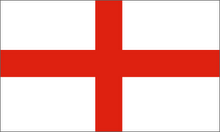
This photograph depicts part of King Street in Whalley, which, as you can see, has been liberally decked out with the Cross of St George in anticipation of their celebration of our patron saint's day next Friday.

In point of fact, every business premises on the road was sporting our national flag, creating a parade of red and white about a quarter of a mile long.

Looks like the people of Whalley intend to take their St George's Day celebrations seriously this year; not too strenuous a proposition even for the most athletically challenged, given that there are four pubs within a fifty-yard radius of the spot from which I took this shot, alarming the two men in it in the process, I suspect...

Saturday, April 10, 2010

Another excellent blog...

As I've written here on a couple of occasions previously, not only have I never smoked a single cigarette in my life, I've never even held a lit one to my lips, and what's more, I'm absolutely certain that I will never do, either.

That said, I'm becoming increasingly irritated by the militant 'health' lobby, who not content with turning smokers into pariahs, doomed to huddle outdoors in all weathers to enjoy their admittedly dangerous habit, are now training their guns on the overweight, those of us who 'fail' to take enough exercise (neither of which applies to me) and those who - whisper it dark - have the temerity to enjoy drinking alcohol (of whom I'm most certainly one).

My take on them is that, far from being concerned about improving the health of the nation, their chief driver is the wish to control the very minutiae of our lives; nothing more, nothing less.

I despise their dishonest, holier-than-thou sanctimoniousness and their nauseatingly judgemental finger pointing. Indeed, in my view, their increasingly strident triumphalism leaves people whose lifestyle choices they disapprove of - the 'fat', 'incorrigible' smokers, and 'problem' (i.e. all) drinkers - just one short step from the tumbrel in which they would be dragged around for the 'righteous' to harangue and disparage.

Anyway, enough from me; but all of the foregoing, and the excellent writing, are just some of the reasons I am linking to this excellent blog, both in this post and in my sidebar.

Please give him a visit: I'm sure you'll enjoy his jottings as much as I do...

Monday, April 05, 2010

How sharper than a serpent's tooth...

Apparently, Her Royal Highness the Princess Beatrice has let it be known that her younger sister, Her Royal Highness the Princess Eugenie is a 'reluctant royal' who would apparently 'give it all up tomorrow', adding that if she could choose any other life, then it woud be one without the public duties and, to paraphrase slightly, the sacrifices which come with the suffocating blanket of royal status. Furthermore, it is clear from her comments that she has a good deal of sympathy with her younger sister's position vis-a-vis the difficulties of being a princess.

Well, I have a solution for the two of them, and it is one wrought not too far away from their own gilded cage, by their aunt Anne. Her children by Capt. Mark Phillips, Mr Peter Phillips and his sister Zara, are, as the Queen's grandchildren, every bit as Royal as Beatrice and Eugenie; but as you will have noticed, neither of them prefaces their name with the title of His or Her Royal Highness and nor are they styled Prince Peter or Princess Zara either.

I think you may see where I'm going with this, and to reinforce my point still further before I even make it, barring an absolute disaster, these two girls, fifth and sixth in line to the throne respectively, will never be called upon to serve the country as its queen.

As such, and bearing in mind their status as 'reluctant' royals, why don't they both simply renounce their titles and divest themselves of the encumbrance of royal nomenclature in the process? I'm sure the appropriate paperwork to facilitate such a process could be drawn up in very short order. Their renunuciations would then be publicised with a strongly worded request to the press and media in general to apply a self-denying ordinance as regards publishing any other material either identifying them, or discussing their lives, from that point on.

Hands up anyone who thinks that these two really rather ordinary-looking and clearly spoilt young women would actively consider adopting such a course for more than a nano-second.

No, I didn't think so.

All this outburst has served to demonstrate is that both Beatrice and Eugenie (or should that be Beattie and Jean in their new, egalitarian world?) want the cake of wealth and prestige of Royal status, whilst simultaneously and childishly resenting having to pay the ha'penny of scrutiny which is its inevitable corollary.

As I have written here many times before, the Throne is an unapologetic supporter of the English monarchy, both as an institution and in the person of the present incumbent; but I'm afraid that stories such as this are manna from Heaven for the abolishionists, and I dare say, extremely irritating for their grandmother, a life-long paragon of duty and self-sacrifice.

Shame on them, their childishness and their nauseating self-pity: and may I wish them the very obscurity they both so richly deserve.

Post script:

As soon as I posted this story, the link to the article in the Daily Mail was disabled, sorry. there again, you've probably got the gist of it anyway...

Sunday, April 04, 2010

Lancashire at its best...


For those of you unfamiliar with the Red Rose county, this shot, taken once again on my trusty mobile, is of the hills surrounding Whitewell in the Forest of Bowland.

The area is best known for the inn which shares its name and I think you'll agree with me that it is a beautiful part of the world; and if my recommendation doesn't convince you, Her Majesty the Queen owns a good deal of the land in this vicinity, though the Duchy of Lancaster estate.

Recommendations don't come much higher, or more significant, than that.

Saturday, April 03, 2010

Breathtaking chutzpah, Archbishop...

I'm not normally one to comment on religious stories, but I couldn't let this one pass without offering my two penn'orth. What's more, I certainly don't consider myself a religious scholar of any sort, and certainly not one in Dr Williams' league; but given the record of the Church of England on this topic over the years, I would have thought the following lines from the Gospel according to Matthew (from the beautiful King James Bible) would be more than apposite:

Thou hypocrite, first cast out the beam out of thine own eye; and then shalt thou see clearly to cast out the mote out of thy brother's eye.

And for the avoidance of doubt, I am a confirmed, but seldom-attending member of the Church of England, just like upwards of ninety five percent of its members...

Thursday, March 18, 2010

It was sixty-years ago today...

Just a very short and rather personal post this evening.

Today would have been my parents' diamond wedding anniversary.

Sadly, my father died suddenly a matter of weeks after they celebrated their silver wedding and my mother ten years later virtually to the day; so there will be no big family get together this weekend to mark the occasion, more's the pity.

As you might appreciate, I couldn't let such an important anniversary pass without comment, or without raising a glass to them this evening.

Thank you.

Tuesday, March 16, 2010

Happy St Patrick's Day to one and all...


I'm in Liverpool all day tomorrow and won't get the chance to post on the day itself. So I hope my Hibernian readers will forgive me if my Irish (or rather Google translate's) is poor, but here goes:

Lá Tá áthas ar Fhéile Pádraig ar bith cuairteoirí ó Éirinn. Tá súil agam tú taitneamh as do lá.


Monday, March 15, 2010

Ashok Kumar: Has history repeated itself?

Reading this account of the 'sudden, accidental' death of Labour MP Ashok Kumar, I am reminded of the untimely death in 1994 of another MP, Stephen Milligan, the unusual circumstances of which are still a talking point, even today.

I wonder, as respectfully as possible, if there will be similar revelations about Mr Kumar?

Of course, we will have to first await the result of the police investigation and then, possibly, that of the ensuing Inquest before we find out. But given the way the report is written, describing MrKumar as 'a single man', with 'no underlying health problems', adding that there are 'no suspicious cicumstances or third party involvement', I think it's a distinct possibility.

For now, though, the Throne sends its condolences to his friends and family.

Update 16.3.10

I'm pleased to be able to say that it would appear that my suspicions about the manner of Dr Kumar's death were unfounded. Just goes to show that putting two and two together can sometimes leave you staring at five.

Thursday, March 11, 2010

S4C: It's all Welsh to me...

I decided some time ago that I was not going to link to any article printed in the Daily Mail, because I had grown to dislike their brand of sensationalist, rabble rousing and ultimately irresponsible journalism.

So it is with that caveat that I link to this story from today's paper, albeit supported by this one in the much more reliable Daily Telegraph.

Why on earth is the taxpayer, 84% of whom are English, remember, subsidising a Welsh language television channel to the tune of £100,000,000 a year, which is all but ignored in Wales itself?

And on any reading of the viewing figures, it is largely ignored; because as much as 22% of its output (196 out of 890 programmes, or nearly a quarter of it) receives so few viewers that they are officially zero rated. More than that, though, only 16% of its programmes receive over ten thousand viewers (139 out of 890), meaning that the remaining 62% of its output is watched by between 1,001 and 9,999 people; or to put it another way, the population of one small village.

What justification can there be for continuing to subsidise this utter failure to the tune of £100m per year?

The channel should either be closed, or required to find its funding through advertising or subscription; the English taxpayer should not be forced to subsidise an unwanted failure for the benefit of a tiny minority of Welsh-speakers any longer, threatened hunger strikes, or no threatened hunger strikes.

Tuesday, March 02, 2010

The demise of the five pound note?


Has anyone out there been in possession of a five-pound note recently which didn't resemble the ragged specimen I picture at the top of this post?
The picture itself doesn't actually do this one justice; it is actually far tattier in the 'flesh' than it looks, to the extent that you could be forgiven for suspecting that it was a crude and artless forgery, printed on low grade tissue paper.
In fact, it reminded me very strongly of a school trip to Italy in the early seventies, when I remember being shocked by the tattiness of virtually every 500 Lire note (yes, it was a very long time ago!) I saw during excursions to places as varied as Milan, Naples, Capri, Rome, Pisa and Pompeii.
As I grew up, I began to think that the state of those Italian banknotes was symptomatic of a currency, an economy and possibly, even a country which had lost pride and faith in itself; it was a symbol of financial collapse.
Is the state of our smallest banknote a harbinger of similar things to come in England?
Or is it just that the banks won't put them in cash machines anymore, because it's not worth their while to dispense them, or more cynically, part of the softening up process required for the replacement of the five pound note with a new, shiny replacement £5 coin?
Or is it a combination of all three?
All I know is that whilst I wouldn't mind having a wheelbarrow full of ragged notes such as the one I depict, I can't remember the last time I had a crisp, relatively unscathed fiver in my pocket.
Anyone care to differ? And if so, where did you lay your hands on them?

Saturday, February 20, 2010

The Battle of Bosworth Field and inevitability...

My regular reader will probably know that I am something of a history buff; not quite in Ana's league, I would happily concede; more of an enthusiastic amateur with an abiding interest in the history of medieval England, which is why this story from last Friday's Times (I've been a bit busy lately!) caught my eye.

I'm sure many of you will have read or heard about the new research, suggesting that the Battle of Bosworth Field, fought in 1485, actually took place a couple of miles from the location in which it was previously believed to have occurred.

So far, so good: despite the fact that the battlefield visitor centre was built in the 'wrong' place, it is still close enough to be of service and in some ways, doesn't actually sully the ground on which our last Plantagenet king, Richard III, lost his life and his crown to the future Henry VII.

But what I found particularly thought provoking about Ben Hoyle's article (I can only assume he is not an historian -he is billed as the paper's Arts correspondent) is the content of this paragraph:

In those few frenzied moments the future of England — and by extension much of the world — changed course. Bosworth became the bridge that links the Middle Ages to modern Britain and ushered in the dynasty of Henry VIII and Elizabeth I. If Richard had killed Henry there might have been no English Reformation, no Church of England and no Elizabethan golden age to inspire artists, explorers and empire builders.

Yes, in those few moments, the future of England changed; the dynasty that had provide the country with fourteen kings in an unbroken chain from 1154 until that moment, was unseated and a new one, the Tudors, took their throne; that much is unarguable. It is the suggestion of inevitability contained in the sentence "If Richard had killed Henry there might have been no English Reformation and no Elizabethan golden age to inspire artists, explorers and empire builders."

Did Richard's defeat, deposition and death really inevitably lead to those eventualities? Or, is all history - including this section of it - essentially the outcome of a series of sometimes random, often unplanned and unforeseeable events?

Let me use the accession of the Tudors and their developing history to illustrate my point.

As many of you will know, the future Henry VIII was not his father's eldest son and was not, therefore, born to be king. That role initially went to his elder brother, Arthur, Prince of Wales, who died aged only fifteen in 1502, seven years before his father. Arthur was (famously and subsequently) married to Catherine of Aragon, who was to become his younger brother Henry's wife after his death.

Imagine, as was entirely possible, that Arthur had lived to maturity and that he and Catherine had produced children. The man we now know as Henry VIII would never have become king and would have been known to history as a mere royal duke; a footnote at the bottom of a page.

Continuing that thought process, had Arthur not died prematurely and he and Catherine had produced children, there would have been no split with Rome (at least when it actually happened), England would have remained as it had hitherto always been: firmly and devoutly Roman Catholic and the Dissolution of the Monasteries may have been unheard of even today.

So much for inevitability.

But Arthur did die, Henry did become king and went on to marry his brother's widow. Their union was blessed with only one surviving child, Mary (the future Mary I); but the couple also had a son, Henry, Duke of Cornwall, who catastrophically died aged less than two months in 1511.

Returning to the concepts of randomness versus inevitability, what if baby Henry had lived to become Henry IX of England? Given his obsession with securing a male heir, the very obsession which subsequently led to his divorce from Catherine and his cataclysmc split with Rome, is it not entirely likely that Henry VIII would have remained happily married to his first queen, as his son and heir grew up, married and had children himself?

Such an eventuality would have meant that Anne Boleyn may have never graced the pages of our national history, other than possibly becoming Countess of Northumberland. A similarly anonymous fate would have befallen Jane Seymour and as a consequence, neither the future Edward VI or, crucially, Elizabeth I, would have been born, still less occupy the Throne in their own rights.

I could go on; what if Mary had not died without issue from her marriage to Philip of Spain, what if Edward VI had lived to adulthood and had children - both eventualities would have meant that Elizabeth would never have ascended the Throne; but I think my point is made.

There is nothing inevitable about the course history takes; it is entirely random and subject to the vagaries of life, death and even human fertility.

I'm sure Ben Hoyle was only using his assertion as a convenient journalistic vehicle in order to illustrate the importance of the discovery of the real Bosorth Field and I am grateful to him for doing so, for prompting me to write this post.

By the way, can anyone else spot any similarities between this related story, also written by Ben Hoyle and published in the Times in September 2009 and the one which I link to above?

Cut and paste journalism in the Times? Perish the thought...

Friday, February 19, 2010

Weather watch...


Whilst it might be a very pretty sight, this photograph, taken about fifty yards from my front door about 8.30 this morning serves to illustrate the sheer inaccuracy of our weather forecasting service, as provided by the Met Office.
During last night's local evening news programme, the weather forecast made no reference to the possibility of snow in the Ribble Valley, or anywhere else in Lancashire, for that matter, whilst the earlier national version warned of potentially heavy falls on the Eastern side of the country.
So, it was with weary resignation that I looked through the window an hour later and saw a scene more reminiscent of Ice Station Zebra, than a small corner of northern England.
However, my fundamental point is this; if the Met Office are really only providing us with what is little more than their best - and often inaccurate - guess as to what the weather is going to do, what is the point of spending so much money on it.
We'd be as well served going to the local wise woman and asking her to divine the forthcoming weather by a skilled examination of freshly slaughtered chicken intestines.
It is a nice picture, though...

The Telegraph on top form...

Thee excellent articles in this morning's daily Telegraph, here, here and here. I agree with every word in all three of them and I have to say that Jeff Randall is rapidly becoming one of my favourite weekly reads.

Snow permitting, I hope to be back later with, er, a weather related post...

Monday, February 15, 2010

St George he was for England...


My regular reader will not be surprised to see me expressing my delight that the people of Darwen, a small market town in Lancashire (for the geographers and town planners amongst you, a classic example of ribbon-development) have decided to hold a week-long celebration to mark St George’s Day on and around 23rd April this year.

Here’s hoping that other towns and cities decide to do likewise and follow the example set by my fellow Lancastrians.

Friday, February 12, 2010

The Philistines of Sussex...


I have to confess that it was the headline of this article from today’s Daily Telegraph which first caught my eye and, as an historian, made my hackles rise, even if the article itself didn’t quite live up to its sensationalist billing.

Notwithstanding the fact that the article was mostly sizzle and very little sausage, it still concerns me greatly that Sussex University is proposing to withdraw from “research, and research-led teaching, in English social history before 1700 and the history of continental Europe before 1900”.

Unlike the seventeen Sussex-educated historians who wrote to the paper condemning the move, and the proposal to withdraw from the teaching of the history of continental Europe before 1900 in particular, however, I am more concerned with the suggestion that henceforth at that university 1700 will represent year zero as regards English social history.

I note at this point, that the article refers quite clearly to English social history and not its political cousin (my ‘discipline’, as it happens) and I take that reference to mean that the politcal history of England will still be researched, lectured on and taught there.

I certainly hope so, and I will return to my reason for saying so in due course.

However, returning to the original quote as to the university’s intentons, and at the risk of being accused of wanting the cake and the ha’penny, it would appear that henceforth, according to Sussex University, prior to the dawning of the twentieth century, nothing of any consequence occurred througout continental Europe.

By doing so, as the article suggests, they clearly think that events of such seminal importance as the French Revolution are not worthy of research or study.
Or, come to think of it any of the following, which I in list in no particular order, either chronological or as to my personal perception of their importance: The Napoleonic Wars, The Renaissance, The Thirty-Years War and the life and works of Martin Luther, one of the fathers of the Protestant Reformation, after whom the great American Civil Rights activist Martin Luther King - another towering figure - was named.*
I could go on, but shortage of prevents me from doing so; and in any event, I suspect my point is made: for a university history department to abandon the study of European (or indeed any history) before an arbitrary date - one which is, in historical terms, relatively recent - is to abandon the subject as a serious academic discipline, in direct contradiction of its raison d'etre.
Returning to the prospect of the university 'starting' English (social) history in 1700 (only seven years before England was subsumed into the kingdom of Great Britain by the passage of the Act of union with Scotland) is also, in my submission, to ignore the importance to that subject of a number of significant events in our political history.
I don't propose to link to these on the basis that a) my reader is more than likely to be already familiar with them or b) that in the event that they are not so familiar, but are still reading this increasingly lengthy piece, they will more than likely be sufficiently interested in the subjects I cite to research them separately.
That explanation aside, these are just some of the political events or processes occurring in England prior to 1700, which I suggest had a significant impact on our social history:
1. The Norman Conquest of 1066 - which essentially removed the old, Anglo-Saxon ruling class and replaced it with invading Normans.
2. The signing of the Magna Carta (which I reproduce in the picture above) by King John in 1215, enshrining a large number of the rights of which our current leaders are so assiduously stripping us, into English law.
3. The Great Plagues of the Fourteenth Century, which went a long way to ending feudalism.
4. The Civil War of 1642 - 1649, which saw England become a republic for the first (and hopefully only) time in its history.
Once again, I could go on; but again, I think I've made my point: English social history did not begin in 1700, and to pretend that events before that date are of insufficient relevance to warrant further study, is to abandon even the pretence of academic rigour.
Defending the university's stance, the deputy vice-chancellor, Professor Paul Layzell said: “The history degree at Sussex, as befits a programme offered by one of the top 20 departments in the country, will continue to be broad based and intellectually challenging.”
I would conclude with this observation, professor. I rather suspect that given the proposed vandalism you propose to inflict, your claim to be 'one of the top twenty [history] departments in the country', will soon be ringing somewhat hollow.
You should hang your head in shame.
* Forgive the continued links to Wikipedia; they simply provide the shortest thumbnail sketch of the events in question, for ease of reference.

Thursday, January 28, 2010

Kevin Myers and 'the English out of Ireland'...

Another post, another link to an article by Kevin Myers in the Irish Independent.

For once, I would take issue with some of his assertions - primarily written for an Irish audience as they may be. For instance, my regular reader cannot be unaware that this Englishman most definitely does take more than a passing interest in Irish history and Irish politics; I would, however, have to concede that I may be in something of a minority amongst my countrymen in that particular regard.

That said, I agree wholeheartedly that it is high time that we (in this instance the government of Britain, not England, as he deliberately misprepresents the case, presumably for effect) withdrew from any future role in the governance of the northern part of the island of Ireland.

I have been of that opinion for some time now, and I am in the process of formulating a post - probably quite a lengthy one, I suspect - to outline my position.

Sunday, January 17, 2010

Is that thing sharp?


Apologies for the even thinner than usual level of posting; I'm recuperating from what I like to describe as minor (and elective) abdominal surgery.


More when I can it at my keyboard a little longer...

Monday, January 11, 2010

Ali Dizaei: the high-stakes 'game' is afoot...

The 'game of high stakes' I wrote about here is now most definitely afoot.

I await developments in the case with interest...

Monday, January 04, 2010

Why Bolton, Owen?

I have to say, both as a football fan generally and a Lancastrian one in particular, that if it actually comes to pass, this story surprises me greatly.

Why on earth would Owen Coyle - an unqualified success as manager of Burnley, a club he steered into the Premier League last May - want to swap the hot seat at Turf Moor for the one at the Reebok Stadium as manager of Bolton Wanderers?

Whilst Bolton is a far bigger town than Burnley, the Trotters' (Bolton, to the uninititated) fan base is not much bigger than the Clarets', given the proximity to Bolton of the two giant Manchester clubs.

Furthermore, the Trotters are also in a worse league position than Burnley right now and therefore, theoretically at least, at greater risk of relegation to the Chumpionship.

More unusually still, it is widely known that following his success in returning Burnley to the top division of English football for the first time for more than thirty years, Coyle, a Glaswegian, was offered the manager's job at Celtic, an opportunity he turned down to guide the Clarets into the Premier League.

Let's just pause there for a minute.

Owen Coyle, a sensible, well-spoken, intelligent, tee-total Glaswegian Celtic fan turned down the chance to manage the club he supported as a boy, to remain loyal to Burnley. He chose to stay in Lancashire, battling against what were then (and still are) steep odds to keep a mill-town club with average home gates around the 20,000 mark, in the English Premier League, rather than assume command of one of the biggest clubs in these islands, with a virtual guarantee of Champions League football every year, to say nothing of Scottish League and cup titles and the unswerving loyalty of 55,000 fans every week.

Curious.

The only explanation I can come up with are that Burnley matched the salary on offer in Scotland, plus Coyle's commendable loyalty and his desire to compete week in and week out against the best teams in the country - not something on offer in Scotland, it has to be said. It might also be the case that as a relatively young man, he has a young family who are settled in their schools and together with his wife, he chose (sensibly) not to uproot them unnecessarily.

But why consider a move to Bolton, and why now?

Bolton, Burnley, Wigan and Blackburn Rovers, the four 'small' Lancashire Premier League clubs are all much of a muchness, it seems to me, in terms of their potential, although I did tip the Clarets for relegation at the start of the season.

Unless I'm missing something here, such as Burnley's chairman refusing to back him in the transfer market, or worse, planning for relegation, I can't see what a shrewd and excellent young manager like Owen Coyle has to gain by moving the twenty miles or so from Burnley to Bolton.

I suppose we may find out, if and when he holds his first press conference as manager of the Trotters, but until then, I'm scratching my head, frankly...

Saturday, January 02, 2010

Let it snow, let it snow, let it snow...


Well actually, I'd rather it didn't really; because living on a hill as we do, it makes getting around more than a little difficult.
That sensible, if rather joyless observation aside, I have to concede that when there is, in the continued words of the song 'simply no place to go', at least, in my case, until Monday morning, it can make for a very pretty picture, such as the one to the left of this post, which I took just before four o' clock this afternoon, no more than fifty yards from my front door.
I just hope it melts sufficiently by Monday morning for me to get the car out...

Eat, drink and be merry?

As those of you who have been visiting the Throne for some time may recall, I exercise regularly, watch what I eat (though not slavishly) and drink in what I would describe as moderate (whilst others would not) quantities. As a result, twenty-seven years on, I weigh the same amount as I did as a twenty-one year old, with a waistline to match.

So, you may imagine that I would heartily welcome this story in today's Telegraph, warning us all in near-apocalyptic terms, that deaths from obesity have doubled in a decade.

Actually, I don't; quite the reverse.

Ignore for a moment the claim (correct or otherwise) that the number of deaths has doubled and instead concentrate on the total number of deaths involved. Let me quote directly from the article:

"The official figures disclose that in 2000, just 25 people aged between 46 and 55 died “where obesity was the underlying cause of death”. By 2005, the number has increased to 51 and last year it was 70.

The “number of deaths where obesity was mentioned anywhere on the death certificate” rose from 121 in 2000 to 257 last year for the same age group. Similar increases were also recorded for those aged between 34 and 45 and 56-65."


A little research shows that in the thirteen years from 1993 and 2005, between 513,000 and 580,000 died in England and Wales each year. Having no reason to suppose that the figures vary greatly from the end of that period to the present day, let's agree (rather unscientifically, I concede) that the average number of deaths every year in England and Wales averages out at 550,000.

Call me old-fashioned, but a blind man on a galloping horse could plainly see that deaths numbered in the hundreds from that one cause pale into statistical insignificance when compared with a total well over half a million a year.

I do not, of course, for a minute suggest that allowing yourself to become obese is a sensible thing to do; far from it as my first paragraph hopefully reinforces.

But I do wonder what a serious newspaper like the Telegraph is doing printing unsupportable rubbish such as this and if anything even more so at the involvement of Conservative politicians, such as Andrew Lansley, parroting the nannyish, infantilising NuLabour line in suggesting the imposition of warning labels on 'bad' or 'fatty' foods.

Step away from the cream cakes, Mr Lansley and put the marker pen down...

Thursday, December 31, 2009

Happy New Year...


As promised in my last post, here I am back before the new year to wish everyone all the best for 2010.
I hope the new decade brings you health, wealth and happiness.
I'm off to my brother's house tonight with Mrs RToK for a suitably modest libation and convivial company. Whatever you are doing, I hope you have fun - as I propose to do - and get home safely.
See you all next year.

Thursday, December 24, 2009

Merry Christmas to one and all...


May I take this opportunity to wish my readers, whether regular, occasional or even accidental, a very merry Christmas. I hope it brings you everything you hope for.

I'll be back before the New Year, if only to mark that occasion, but in the meantime, all the shopping's done (well, all that's going to be done, anyway!), so it's time to have some fun, indulge myself in various different ways (mainly eating and drinking) and most importantly, to spend some time with Mrs RToK and the family.

See you all soon.

Tuesday, December 22, 2009

Kevin Myers on mob mentality and hypocrisy...

By way of a gentle reintroduction to my ramblings, I've once again linked to an article by the ever-excellent Kevin Myers of the Irish Independent, in which he lampoons both the bloodlust of the (Irish) mob - it could just as easily be an English one, frankly - and the hypocrisy of those criticising middle-aged white men as sexual bigots.

Spot on, as always.

Thursday, December 10, 2009

Incongruity...


This is the main gate at Her Majesty's Prison in Preston. As I was driving past it the other evening on my way home, my eye was drawn to the pictured section of it by the presence of three sets of festive lights, two of which - each easily three feet or more in height - were flashing the words 'Merry Christmas' intermittently in gaudy red neon. As far as I could ascertain, the third, central montage appeared to depict a reindeer, or something similarly seasonal.

HMP Preston is a Category B prison, situated on the periphery of the city centre. Is it just me, or is the presence of these lights, charming as they were, not just a little out of place at the front gate of a penal institution such as that?

Just a thought...

Saturday, November 21, 2009

Has Ireland been enslaved again?

Regular Thronistas and let's face it, with the numbers of links I provide to it, even casual visitors will know that I am a regular reader of the on-line version of the Irish Independent newspaper, and in particular their (in my view) star columnist, Kevin Myers.

One of the reasons I read it so often - every day, really - other than to get my regular fix of Myers' often trenchant views is that as an historian, I have a significant interest in modern (i.e. 20th Century) Irish history and as such, it intrigues me to read about current Irish politics, which are, of course the stuff of tomorrow's history lessons.

I have to confess, however, that one thing I have never been able to understand about the history of Ireland is that having struggled for eight hundred years to establish herself as an independent, sovereign country, she chose to subsume herself in a much larger European empire, in which her voice, or rather that of her population, (barely 1% of the total population of the 'EU'), is but an easily ignored whisper, easily and airily dismissed along with those of Lithuania and the like, by their new masters.

That is why the content of this unattributed editorial from today's paper, which is so good it could well have come from the keyboard of Myers himself, struck such a chord with me, because it would appear that there are well educated Irishmen whose views square entirely with my own.

And whilst I consider that a welcome validation of my outsider's view of Irish history, I wonder how it squares with the Indo's pro-Lisbon stance during the recent referendum campaign?

Is this the first expression of regret at having conceded their hard-won independence, or is it a case of the paper wanting to have both the cake and the ha'penny?

Any views, particularly from my Irish readers?

Friday, October 02, 2009

The 'new' Kevin Myers?

Regular visitors to the Throne - how many posts have I begun with those words of late - will know that I have the highest regard for the writing of Kevin Myers of the Irish Independent and that I regularly link to articles he has written.

It was as a consequence of my regular visits to the Irish Independent's website, in search of more nuggets from Myers' keyboard, that I discovered the work of another one of their regular columinsts, Ian O'Doherty.

In this piece, entitled 'Men are portrayed as complete spanners', he argues that only straight, white men - his words - can be now be insulted with impunity.

I tend to agree with him; but what do you think?

Thursday, September 24, 2009

Beautiful England (2)


I took this photograph of Dunsop Bridge, a small village about ten or eleven miles from Clitheroe, on what will probably turn out to be the last sunny day of this summer.
The centre of the village itself is only tiny - the photo actually captures about half of it - but it is a truly beautiful place.
It is yet another of the Ribble Valley's (albeit the locals would probably say the Hodder Valley's) hidden jewels.
Just one word of caution for the prospective visitor; don't turn up expecting to find a village pub at which to slake your thirst: there isn't one!
By the way, who said that Lancashire was a place of dark satanic mills, cobbled streets, flat caps and whippets?
As Lord Melchett might have observed, "Au contraire, Blackadder..."

Thursday, September 17, 2009

The English 'Columbine' Two...

Regular visitors to the Throne will recall that I yield to no man in the strength of my support for the presumption of innocence in respect of those charged with criminal offences. For newer, or more occasional visitors, I have written of my support for the concept in cases as diverse as the recent Gerrard ‘affray’ case, of which of course, he was famously acquitted, the Ali Dizaei case and the potential charges to be levelled against the police officer involved in the death of Ian Tomlinson at the G20 protest in London.

That said, any civilised society, and despite the best efforts of the present government, we still just about qualify to consider ourselves as such, requires a robust system for managing the prosecution of (potential) offenders. Every such system of which I am aware is centred on there being independent courts of law in which those accused of criminal behaviour may plead their innocence in front of a jury of their peers.

That, in essence, is what I understand to be role of the criminal courts: to assess whether those accused of offences are either guilty as charged or not.

That is why I am astonished by the tidal wave of legal and journalistic criticism being faced by the Greater Manchester Police and, more savagely, the Crown Prosecution Service, for instituting criminal proceedings against Matthew Swift and Ross McKnight, the teenagers from Manchester who were alleged to have been planning an English ‘Columbine’ massacre.

Indeed, I have looked in vain for a single report into the acquittal of these two boys, which has not indulged in sometimes trenchant criticism of the decision to prosecute them in the first place. To illustrate my point, I have provided links to press reports from across the political spectrum here, here and here and just for good measure to three more here, here and here. I could have linked to more, including the BBC; but I think you get the picture.

All of them refer to the criticism levelled at the prosecuting authorities by defence counsel, Roderick Carus QC, for taking these boys to court in the first place.

Before I go any further, it is only fair to acknowledge that Mr Carus’ knowledge of the facts in this case is infinitely greater than mine, as, I have no doubt whatever, is his knowledge of the law; but let me just examine one or two of the points he made in his court-steps critique of the decision to prosecute the pair for conspiracy to murder and conspiracy to cause explosions – effectively to potentially commit mass murder, such as:

“Why could they [presumably the police] not take them to one side, slap them on the wrists and say ‘don’t be silly boys, now off you go and enjoy your careers in the Army?’”

Or:

“I would hope the prosecuting authorities make more allowances for the frivolity of youth in future.”

Well let me see, Mr Carus. Imagine for a minute that the police had simply taken the pair of them to one side and “slapped their wrists” and then released them to join the Army, where, presumably, they would have access to firearms and explosives. Continue to imagine the firestorm of criticism which would have been levelled at the police had either of them used their access to those weapons and explosives to put their 'frivolous' and ill-conceived ‘plans’ into operation, resulting in the violent deaths of large numbers of people.

That firestorm, hungrily stoked by the same journalists currently criticising the decision to prosecute in this case, would doubtless result in the resignation, or even dismissal, of the Chief Constable of GMP, to say nothing of numbers of his subordinates, and in all probability the resignation of the Home Secretary, were he or she a member of a party other than Teflon Labour.

It may be an unfortunate analogy, doubly so, since the two boys were acquitted, but I wonder what the fourth estate and the critical Mr Carus would have made of a decision to give the parents of Baby Peter a ‘slap on the wrist’?

Mr Carus’ comments aside, what of that decision to prosecute?

The police investigated what they clearly believed to be a plot to commit mass murder; in other words, they did their jobs. The evidence they assembled, albeit ultimately rejected by the jury, was forwarded to the Crown Prosecution Service, who, after mature consideration, decided that there was both a realistic prospect of conviction based on the papers (in other words, in their professional opinion, more that a fifty percent prospect of conviction) and an overwhelming public interest in prosecuting the case.

In turn, two barristers were briefed to prepare and present the case on behalf of the Crown. One of those barristers was the eminent QC, Peter Wright, who led the prosecution of Steve Wright, the Ipswich prostitute murderer, those of the recently convicted ‘airline suicide bombers’ and was junior counsel for the prosecution in the Harold Shipman case; hardly the career profile of a man who would fight shy of advising that an allegedly weak case was not worthy of prosecution.

Taking the argument one step further, if the case against the two was as weak as Mr Carus suggests, why wasn’t he successful in submitting that his client had no case to answer at the close of the prosecution case? If he did make such a submission, it was clearly rejected by the judge, who in doing so made the tacit observation that there was indeed a case for his client to answer. If, on the other hand, he didn’t address the judge on that matter, then he clearly accepted that there was such a case himself; he cannot have it both ways.

But let me return to the point I made at the beginning of this post.

The criminal courts are there to assess whether those put in front of them by the Crown are guilty of the offences with which they have been charged. They do not, and should not, exist to simply rubber-stamp the conviction of those against whom the evidence of guilt is so overwhelming that there can be no question of their possible acquittal.

Similarly, when a case has reached a jury for a decision as to the guilt or innocence of the accused, the prosecuting authorities have done their job: the verdict on that work is then in the hands of the twelve people on the jury who have to be satisfied so that they are sure of the guilt of the accused, before they can convict him.

To criticise those same authorities for failing to secure convictions when the power to do so is ultimately (and rightly) in the hands of twelve people with little or no previous knowledge of the law is grossly unfair, as indeed it is to criticise the system of justice in this country when it has demonstrably worked in this case as it was designed to do.

On mature reflection and when no longer basking in the triumphalist light of the headline hungry media, Mr Carus may just agree with me.

Meanwhile, Matthew Swift and Ross McKnight are free to resume their lives, having had the presumption of their innocence confirmed at the end of their trial.

That is our system; and whatever the results, perverse or otherwise, long may it remain so.

Sunday, September 13, 2009

Heart attacks and the smoking ban...

I read this article from The Times (it also appeared in a number of other papers, notably the Daily Mail) with more than a little interest.

The reason for that is quite simple; my father died at the age of 47 – younger than I am now - of a heart attack, having suffered his first two such episodes at the incredibly early age of 38.

Up until suffering those first two attacks in the mid-sixties, like the vast majority of his contemporaries, he had smoked about twenty-five untipped cigarettes a day, in addition to regularly smoking a pipe. After those early attacks, however, he never smoked another cigarette, nor touched his pipe again for the rest of his life – all nine years of it.

As you might imagine, losing my father to heart disease at such a young age (I was 14) has had what I now understand to be a significant effect – and ongoing - on my psyche; in fact all the more so as I grew older. For instance, odd as it might sound, turning 39 without having suffered a heart attack or another, related condition was an important milestone for me. More important still was the day on which I actually surpassed my father’s age; a date, moreover, that I had calculated months in advance. And just in case you think I’m a little odd, I took a great deal of comfort from the fact that my elder brother (five years older than me and still hale and hearty, I’m glad to say) did exactly the same.

I also have no doubt whatsoever that my enthusiasm for keeping fit and maintaining a healthy weight similarly arise from my father’s (and therefore my family’s) experience.

So, as I observed in the first sentence of this post, the article in The Times suggesting that the ban on smoking in public places has led to a 10% fall in heart attack rates in England was of the greatest interest to me, irrespective of the fact that I have never so much as put a cigarette to my lips.

But having read it more than once, a nagging doubt about the accuracy of the story occurred to me.

I cannot think of a single person who has stopped smoking because of the ban of doing so in public places; all they do is simply troop off to the smoking area-cum-shelter-cum-lean-to where they are allowed to indulge their habit. What’s more, I can personally vouch for the fact that non-smokers tend to join them, in order that the night out, and whatever conversation is taking place, isn’t unduly interrupted, or in some cases, ruined.

What’s more it has been my experience that smokers deprived of the right to indulge their habit inside buildings – chiefly pubs, of course – have taken to doing so in the comfort of their own homes, lubricated by large quantities of cheap the supermarket beer I have written about before.

So why have the heart attack statistics reportedly gone down by such a significant percentage?

The simple answer is, I simply don’t know; but I would be very sceptical of any suggestion that, given the absence of any significant evidence proving the wholesale cessation of smoking by those engaging in it ‘first hand’, the reduction was exclusively due to non-smokers no longer being exposed to the deleterious effects of ‘secondary smoking’, a concept on which the jury is still out.

I am not an epidemiologist, and nor do I claim any medical expertise, but if there has been a ten percent reduction in the national heart attack rate, could the fact that people may be taking more exercise, or eating more sensibly, or advances in drug treatments not be partially responsible for it, too?

Sadly, I remain unconvinced by their theory that the smoking ban alone has been responsible for this reduction, because hand in glove with that claim comes the suggestion (or should that be demand?) that the ‘ban’ should be extended still further, into cars carrying children, or most sinisterly of all, into private houses where there are children present.

I’m afraid to say that I see the use of this as yet unsupported statistic as more emotive grist to the bansturbators’ mill and as much as I would like to do so, I simply don’t believe it.

Beautiful England...


Every now and again, myself and Mrs RToK enjoy a lengthy stroll in the countryside, particularly in the area around Malham in North Yorkshire.

The village is, of course synonymous with the Cove which shares its name, but there is far more to the area than even that majestic feature, as the photograph to the left of this post so amply demonstrates.

For the uninitiated, this waterfall, which is about a mile and a half from the centre of the village, is known locally as Janet’s Foss. Legend has it that Janet (or Jennet), the queen of the local fairies, lives in a cave behind the waterfall.

Fairy stories aside, it is a truly beautiful sight and let me assure you that the water in the pool at the foot of the waterfall itself really is as crystal clear and inviting as it appears on this shot.

Wednesday, September 09, 2009

Dramatic England...


Having posted a picture of the Cross of St George flying from the illuminated inner keep of Clitheroe Castle a few months ago, I doubted that I would ever find a better image of our national flag, hence the absence of any further photos in what was, until that point, a short series of such shots.

I still think that shot is the best one I'll ever take, but the one which appears to the left runs it a very worthy second, even though this photo hardly does it justice.

As regular Thronistas may have gathered, I took it on my mobile as it dominated the skyline above the town of Settle in North Yorkshire.

In point of fact, stood at the vantage point from which I took this shot, I was spoilt for choice in terms of the sheer number of English flags I could see flying fom shops and other buildings in what is a very pleasant, old fashioned, and highly presentable English town.

Commendable.

Of course the most important one I can possibly imagine taking will be of the CoSG flying above the Palace of Westminster.

I'm really looking forward to taking that one...

Thursday, September 03, 2009

Kevin Myers and an uncomfortable truth for the English...

For those of my readers labouring under the misapprehension that my favourite columnist, Kevin Myers of the Irish Independent, is an unreconstructed Anglophile, for whom our (English) national heroes can do no wrong, have a look at this article, in which he savages our war time 'saviour', Winston Churchill.

Uncomfortable reading, isn't it; probably because - Heaven forfend - every word is the unvarnished truth...

Michael Mansfield QC and his 'missing' Knighthood...

The 'Ephraim Hardcastle' column in today's Daily Mail contains a story about the famous radical barrister Michael Mansfield QC.

As I cannot link directly to that item in isolation from the rest of 'his' column - it's a pretty open secret that the name 'Ephraim Hardcastle' is a nom-de-plume for the Mail's regular columnist, Peter McKay - I'll reproduce it here in its entirety:

"Michael Mansfield QC, 67, says in his rather naffly-titled book, Memoirs of a Radical Lawyer, that, in his 1950s youth, growing up in the London suburb of Barnet, his mother 'cajoled me into joining the Young Conservatives so I could learn the quickstep and meet the right sort of girl'.

He had two wives - Melian Bordes, by whom he has five children, and documentary maker Yvette Vanson, with whom he has one.And his quickstep? Envious colleagues say few have niftier footwork when it comes to bagging lucrative criminal briefs. But why no knighthood for a QC of his eminence?


Surely it isn't being withheld because he represented the Royal Family's erstwhile friend, Mohamed Al Fayed? Mansfield says in his memoir that Prince Philip referred to Dodi Fayed as 'an oily bed-hopper'."


I don't think that's the reason at all. The reason he hasn't been honoured with a knighthood - frankly few barristers are, however eminent - is rather more straightforward; Mansfield is an avowed republican, as the following excerpt from website of ‘Republic’ The Campaign for an Elected Head of State, tends to confirm:

"The republican movement has been buoyed by Republic's recent success in challenging the oath of allegiance and launching its "Royal Finance Reform Charter". Republic's campaign is backed by many high profile republicans including Polly Toynbee and Michael Mansfield QC."

So, accepting for the purposes of this post that Mansfield is a man of principle, I would expect any self-respecting republican (a perfectly legitimate position to adopt, irrespetive of the Throne's profound disagreement with it) to reject the offer of a knighthood out of hand, or risk the accusation of hypocrisy.

Just two futher observations.

Firstly, I wonder why a 'republican' actively sought the status of Queen's Counsel; couldn't a self proclaimed socialist such as Mansfield have had just as successful and as high profile - not to mention lucrative - a career at the Bar without those two post-nominal letters, or did he seek them for the financial rewards they would bring?

And secondly, with people such as the increasingly comical Polly Toynbee and Mr Mansfield supporting the abolition of our monarchy, I'm reassured that my grandchildren will be celebrating the coronation of King William V's successsor in about seventy years' time...

Tuesday, September 01, 2009

Kevin Myers, 'Irish' America and Irish Shibboleths...

As regular readers will doubtles be aware, The Throne is something of a fan of Irish Independent columnist Kevin Myers.

One of the reasons for that, in addition to his highly readable style, is his preparedness to write potentially unpopular articles, a number of which I have linked to here in the past.

True to form, his latest column attacks what he describes as "the national addiction for a tale of oppression, " based on the reaction to the death of (the unlamented) EM Kennedy, whilst simultaneously firing a broadside at 'Irish' America.

I recommend that you read it in its entirety.

Tuesday, August 18, 2009

More football predictions...

As promised, and admittedly a week or so later than I would have liked, I have finally managed to dust off the crystal ball and to come up with my predictions for the forthcoming Premier League season.

But before I give you my predicted final placings, I thought it would be appropriate to write a little about each team to demonstrate my thinking. I doing so, I have broken the twenty clubs down into four groups, the Lancastrians, the Midlanders, the Londoners and the Odds and Sods.

As I noted at the end of last season, teams based in Lancashire now constitute 40% of the Premier League. However, I see this season as being something of a variation on the theme of the Curate’s Egg for the Red Rose members, with some enjoying good, successful seasons and the others potentially toiling to avoid being drawn in to the relegation dog-fight. Amongst the former, of course are Manchester United and Liverpool, both of which I expect to find in the top four next May. That said, unlike many pundits (most of whom it seems to me actually played for the club!) I do not subscribe to the theory that this will be Liverpool’s season to lift the trophy. I think that the combination of the loss of Alonso and the presence of stronger teams will see that particular Holy Grail remain out of their reach for yet another year. Manchester United, on the other hand, have an unparalleled record of success in this competition in recent years and will doubtless go very close to winning it again.

United’s opponents from across Manchester, with the bounty of Sheikh Croesus behind them will also have a very good season. Quite whether that will translate into a top-four position, I am not sure, because whilst they have more strikers than Bob Crow, they look a little short in defence to me, which will always make them vulnerable to conceding goals in a way that the top four simply don’t do.

Everton will also have a good season and I expect them to qualify for the Europa League, or whatever it will be called by then, particularly if they manage to fend off the predations of Man City and hold on to Joleon Lescott.

Moving on to the other Lancastrians, I fear that newly promoted Burnley will be returning whence they came, irrespective of their putting up a good fight to retain their status. They simply do not have the team or resources to survive: sad, but true. Meanwhile, their closest neighbours and fiercest rivals, Blackburn Rovers should be well enough equipped to secure a respectable mid-table finish, given the managerial skills of Sam Allardyce. Ditto Bolton Wanderers under Gary Megson; but I have a sneaking feeling that Wigan could find this season tough going, having lost an inspirational manager in Steve Bruce and a couple of important players.

Of the Midlanders, it will not surprise any of you to learn that I expect Aston Villa to lead their particular pack. However, shorn of Gareth Barry and with their one expensive summer signing (Downing) not expected to be fit until the New Year, I doubt that they will perform as well as they did last term. Birmingham City will regard staying in the division this season as a success and I fully expect them to do so. I cannot, however say the same for Mick McCarthy’s Wolves, who I think are in danger of becoming another yo-yo club like West Brom: too good for the Championship and not good enough for the Premier League. Finally for this group, and stretching geographical boundaries to breaking point, I see Stoke City having a season similar to the one that they enjoyed last time: their home form will keep them up, together with the odd point or three they collect on their travels.

Turning to the Londoners, no one will be surprised to see that I think that both Chelsea and Arsenal will be in the top four at the end of the season. Chelsea in particular have not lost any of their marquee players (unlike their northern rivals) and must have an excellent chance of winning the League for the first time for a couple of seasons. Arsenal, meanwhile, under the shrewd, but irritating Arsene Wenger will probably just about pip Man City to fourth place – but only just. Tottenham will be a far better prospect under Harry Redknapp than they were this time last year under Juande Ramos. That said, I don’t see them squeezing into the Europa League places unless seventh place would be sufficient for them to do so. Whilst I don’t foresee any problems for them, I don’t see Fulham repeating their success of last season and a solid mid-table finish is the best they can hope for. West Ham, on the other hand, under the mercurial Zola could, repeat could, be this year’s surprise package; however their financial position could spoil what would have otherwise been a season of progress and achievement.

No relegation worries for the Londoners, then.

Sadly, I can’t say the same for all of the members of my final group, the Odds and Sods. I fear that Portsmouth could collapse both financially and in terms of their haemorrhaging players at an alarming rate. Unless their Sheikh gets his hand in his pocket and buys the club very, very soon, I can hear the Pompey chimes ringing at Championship grounds in 2010-2011. Hull City, meanwhile will once again survive by the skin of their Tiger teeth, leaving Phil Brown a couple of shades lighter than his usual mahogany. Finally, Sunderland. I have a sneaking suspicion that this could be a breakthrough season for the Black Cats: they have a new, wealthy owner, an excellent manager in Steve Bruce and a squad recently reinforced by some quality players, such as Darren Bent. There will be no relegation worries at the Stadium of Light this year – far from it.

So, this is how I see the final league table next May:

1. Chelsea
2. Manchester Utd
3. Liverpool
4. Arsenal

5. Manchester City
6. Everton
7. Spurs

8. Aston Villa
9. West Ham
10. Sunderland
11. Fulham
12. Blackburn Rovers
13. Bolton Wanderers
14. Stoke City
15. Wigan Athletic
16. Birmingham City
17. Hull City

18. Wolves
19. Portsmouth
20. Burnley

Will I be as successful with my predictions as I was last season?

We will find out next May and once again, I will hold myself up to potential ridicule by comparing those predictions with what really happened…

Friday, August 14, 2009

How are the (self-supposed) mighty fallen...

How indeed.

Just fifteen short months ago, footballer David Bentley, then of Blackburn Rovers, had the world at his undoubtedly talented feet. He had just finished a successful season with his club and, having broken into the England team, was being spoken of as the 'new David Beckham'.

Those of us as interested in the back pages of the newspapers as we are in the front ones could not avoid acres of coverage, in which he explained, amongst other things, his love of DIY and how he overcame a gambling problem.

At the same time, those same articles began to mention that Bentley saw his footballing future away from Lancashire, at one of the four clubs then (and now) capable of launching a challenge for a Champions' League place, where he could also improve his international chances.

He and his agent began to openly court such a move, against the undoubtedly wiser (and possibly hypocrtical) counsel of his then manager, Mark Hughes, who, having advised him to stay at Ewood Park for at least another year, himself left the club for Manchester City and Thaksin Shinawatra's allegedly bloodstained Baht. Irrespective of that advice from a man who's pedigree was there to be respected, Bentley and his advisors believed their own publicity and the agitation for a move gathered pace.

Unfortunately for Bentley, none of the top four clubs were interested in acquiring his services, but then up popped Juande Ramos' Tottenham - the club Bentley supposedly supported as a boy - with a bid of fifteen million pounds, and the deal was swiftly done.

Indeed, by the time the transfer went through, I know a good many Blackburn fans who would have willingly taken the day off work, filled their car with petrol and driven him to London themselves, simply to rid their club of his disruptive presence.

Bentley described the transfer as his 'dream' move, but all too quickly from his perspective, the dream began to sour. For whatever reason - it is alleged that juvenile stupidity during an England get-together may have played a part - the famously professional Fabio Cappello jettisoned him from the national squad, never to return.

So far, so bad, but worse was to come. Ramos went the way of all flesh after a disastrous start to the season which saw Tottenham bottom of the league, to be replaced by everybody's favourite Cockney geezer, 'appy 'arry Redknapp, who quickly decided that Bentley had no place in his best (or indeed any) Spurs eleven and promptly dropped him.

Further humiliation was heaped on Bentley when, selected to play in the Carling Cup tie at Burnley - Blackburn Rovers nearest neighbours and fiercest rivals - he was withdrawn at half time, following a performance of quite unique incompetence.

To compound matters, from Easter onwards, Redknapp made it clear that Bentley had no future at Spurs, and was actively advising him to seek employment at another club, in order to 'rebuild' his career; the footballing equivalent of a failed X Factor audition.

So, twelve months after ignoring the advice of a man who had managed him into the England side, Bentley had lost his England place, lost his place in the Spurs team and had been told in no uncertain terms that he was surplus to requirements at White Hart Lane.

Then this happened.

Well at least he'll be able to afford a driver to take him to training whilst he serves his latest disqualification, but as I have titled this post 'how are the mighty fallen'.

I wonder if he wishes now that he'd followed Mark Hughes' advice and stayed at Blackburn for another year...

Tuesday, July 28, 2009

Two sacks, or three, Mr Heathcoat-Amory?


Whilst strolling home from my regular twice-weekly run, I spotted this sign and the accompanying, erm, pile on a country lane in Old Langho near Whalley.

Granted, it's in a reasonably well-hidden corner of the Ribble Valley, and a conservative 230 miles from his home in Somerset, but what a pity David Heathcoat-Amory MP didn't happen upon it by chance.

Just think of the trouble he might have avoided...

Friday, July 24, 2009

Steven Gerrard: acquitted and innocent...

Just over four months ago, I posted this update to a post I wrote in January of this year about the Steven Gerrard 'assault' case.

I will not bore you all by rehearsing the points I made in those posts - the links are there for you to read at your leisure - but forgive me for reminding you that they both referred to the presumption of innocence granted to those charged with offences inthis country; a presumption which many in the press chose to virtually ignore in questioning whether Gerrard was fit to play for either his country or his club, because he had been charged with assault - a matter which was subseuently dropped before it went to trial - and affray.

Well the wheels of justice have now turned, Mr Gerrard has been tried and acquitted of that allegation.

And for those in the press who possibly wanted to see him convicted, allow me to point to the words of the trial judge, Henry Globe QC, in discharging and releasing him:

"The verdict is a credible verdict on the full facts of this case, and you walk away from this court with your reputation intact... what at first sight to the casual observer may seem to have been a clear-cut case against you of unlawful violence, has been nowhere near as clear-cut upon careful analysis of the evidence."

And that, in a couple of sentences, is why we have the presumption of innocence; because in a trial situation, when evidence is tested, it is often found to be far more opaque than it first appeared.

I wonder if all those journalists who salivated so obviously over Gerrard's arrest and subsequent trial will have the decency to print articles as large as their sensational originals in apologising to him and declaiming his innocence?

I won't hold my breath waiting for them to appear.

Wednesday, July 15, 2009

Kevin Myers on the Irish public sector...

By way of a gentle reintroduction to my ramblings, here is another article by one of my favourite columnists, Kevin Myers of the Irish Independent, in which he lays into the feather-bedded public sector in the Republic.

I don't know what you think, but I wouldn't have thought that the Irish trades union movement or Irish public sector workers in general will be toasting Mr Myers' health this evening...

Do you?

Thursday, July 09, 2009

Excuses old and new and a rediscovered passion...

Well, once again, it's been a while since my last post and the reasons for my lack of productivity are a combinaion of the familiar and the new.

Put briefly, I've been very busy at work again, but in all honesty, not so busy that I couldn't have tapped out a quick post or two, had I been minded to do so; and therein lies the second reason: during my recent editing exercise, I simply got out of the habit of posting and at the same time, lost my enthusiasm for doing so, too.

As if that combination wasn't toxic enough, a further conspirator raised its head in the form of my renewed interest in the history of mediaeval England, which has seen me with my head in a book for a couple of hours most evenings, the latest of which is Marc Morris's excellent biography of Edward I, "A Great and Terrible King: Edward I and the Forging of Britain".

Those of you familiar with the Throne will have anticipated that I bridled slightly at the use of the word 'Britain' in the title of the book - Edward was king of England - but other than that admittedly minor quibble, it is a good read at 480 pages.

Now I've finished that one, I'm planning to move on to similar sized works on the life and reign of his son Edward II (red-hot poker, anyone?) and subsequently that of his grandson, the arguably even greater Edward III.

Should keep me out of trouble, whilst I attempt to recover my writing 'mojo'...