Thursday, September 24, 2009
Beautiful England (2)
Thursday, September 17, 2009
The English 'Columbine' Two...
That said, any civilised society, and despite the best efforts of the present government, we still just about qualify to consider ourselves as such, requires a robust system for managing the prosecution of (potential) offenders. Every such system of which I am aware is centred on there being independent courts of law in which those accused of criminal behaviour may plead their innocence in front of a jury of their peers.
That, in essence, is what I understand to be role of the criminal courts: to assess whether those accused of offences are either guilty as charged or not.
That is why I am astonished by the tidal wave of legal and journalistic criticism being faced by the Greater Manchester Police and, more savagely, the Crown Prosecution Service, for instituting criminal proceedings against Matthew Swift and Ross McKnight, the teenagers from Manchester who were alleged to have been planning an English ‘Columbine’ massacre.
Indeed, I have looked in vain for a single report into the acquittal of these two boys, which has not indulged in sometimes trenchant criticism of the decision to prosecute them in the first place. To illustrate my point, I have provided links to press reports from across the political spectrum here, here and here and just for good measure to three more here, here and here. I could have linked to more, including the BBC; but I think you get the picture.
All of them refer to the criticism levelled at the prosecuting authorities by defence counsel, Roderick Carus QC, for taking these boys to court in the first place.
Before I go any further, it is only fair to acknowledge that Mr Carus’ knowledge of the facts in this case is infinitely greater than mine, as, I have no doubt whatever, is his knowledge of the law; but let me just examine one or two of the points he made in his court-steps critique of the decision to prosecute the pair for conspiracy to murder and conspiracy to cause explosions – effectively to potentially commit mass murder, such as:
“Why could they [presumably the police] not take them to one side, slap them on the wrists and say ‘don’t be silly boys, now off you go and enjoy your careers in the Army?’”
Or:
“I would hope the prosecuting authorities make more allowances for the frivolity of youth in future.”
Well let me see, Mr Carus. Imagine for a minute that the police had simply taken the pair of them to one side and “slapped their wrists” and then released them to join the Army, where, presumably, they would have access to firearms and explosives. Continue to imagine the firestorm of criticism which would have been levelled at the police had either of them used their access to those weapons and explosives to put their 'frivolous' and ill-conceived ‘plans’ into operation, resulting in the violent deaths of large numbers of people.
That firestorm, hungrily stoked by the same journalists currently criticising the decision to prosecute in this case, would doubtless result in the resignation, or even dismissal, of the Chief Constable of GMP, to say nothing of numbers of his subordinates, and in all probability the resignation of the Home Secretary, were he or she a member of a party other than Teflon Labour.
It may be an unfortunate analogy, doubly so, since the two boys were acquitted, but I wonder what the fourth estate and the critical Mr Carus would have made of a decision to give the parents of Baby Peter a ‘slap on the wrist’?
Mr Carus’ comments aside, what of that decision to prosecute?
The police investigated what they clearly believed to be a plot to commit mass murder; in other words, they did their jobs. The evidence they assembled, albeit ultimately rejected by the jury, was forwarded to the Crown Prosecution Service, who, after mature consideration, decided that there was both a realistic prospect of conviction based on the papers (in other words, in their professional opinion, more that a fifty percent prospect of conviction) and an overwhelming public interest in prosecuting the case.
In turn, two barristers were briefed to prepare and present the case on behalf of the Crown. One of those barristers was the eminent QC, Peter Wright, who led the prosecution of Steve Wright, the Ipswich prostitute murderer, those of the recently convicted ‘airline suicide bombers’ and was junior counsel for the prosecution in the Harold Shipman case; hardly the career profile of a man who would fight shy of advising that an allegedly weak case was not worthy of prosecution.
Taking the argument one step further, if the case against the two was as weak as Mr Carus suggests, why wasn’t he successful in submitting that his client had no case to answer at the close of the prosecution case? If he did make such a submission, it was clearly rejected by the judge, who in doing so made the tacit observation that there was indeed a case for his client to answer. If, on the other hand, he didn’t address the judge on that matter, then he clearly accepted that there was such a case himself; he cannot have it both ways.
But let me return to the point I made at the beginning of this post.
The criminal courts are there to assess whether those put in front of them by the Crown are guilty of the offences with which they have been charged. They do not, and should not, exist to simply rubber-stamp the conviction of those against whom the evidence of guilt is so overwhelming that there can be no question of their possible acquittal.
Similarly, when a case has reached a jury for a decision as to the guilt or innocence of the accused, the prosecuting authorities have done their job: the verdict on that work is then in the hands of the twelve people on the jury who have to be satisfied so that they are sure of the guilt of the accused, before they can convict him.
To criticise those same authorities for failing to secure convictions when the power to do so is ultimately (and rightly) in the hands of twelve people with little or no previous knowledge of the law is grossly unfair, as indeed it is to criticise the system of justice in this country when it has demonstrably worked in this case as it was designed to do.
On mature reflection and when no longer basking in the triumphalist light of the headline hungry media, Mr Carus may just agree with me.
Meanwhile, Matthew Swift and Ross McKnight are free to resume their lives, having had the presumption of their innocence confirmed at the end of their trial.
That is our system; and whatever the results, perverse or otherwise, long may it remain so.
Sunday, September 13, 2009
Heart attacks and the smoking ban...
The reason for that is quite simple; my father died at the age of 47 – younger than I am now - of a heart attack, having suffered his first two such episodes at the incredibly early age of 38.
Up until suffering those first two attacks in the mid-sixties, like the vast majority of his contemporaries, he had smoked about twenty-five untipped cigarettes a day, in addition to regularly smoking a pipe. After those early attacks, however, he never smoked another cigarette, nor touched his pipe again for the rest of his life – all nine years of it.
As you might imagine, losing my father to heart disease at such a young age (I was 14) has had what I now understand to be a significant effect – and ongoing - on my psyche; in fact all the more so as I grew older. For instance, odd as it might sound, turning 39 without having suffered a heart attack or another, related condition was an important milestone for me. More important still was the day on which I actually surpassed my father’s age; a date, moreover, that I had calculated months in advance. And just in case you think I’m a little odd, I took a great deal of comfort from the fact that my elder brother (five years older than me and still hale and hearty, I’m glad to say) did exactly the same.
I also have no doubt whatsoever that my enthusiasm for keeping fit and maintaining a healthy weight similarly arise from my father’s (and therefore my family’s) experience.
So, as I observed in the first sentence of this post, the article in The Times suggesting that the ban on smoking in public places has led to a 10% fall in heart attack rates in England was of the greatest interest to me, irrespective of the fact that I have never so much as put a cigarette to my lips.
But having read it more than once, a nagging doubt about the accuracy of the story occurred to me.
I cannot think of a single person who has stopped smoking because of the ban of doing so in public places; all they do is simply troop off to the smoking area-cum-shelter-cum-lean-to where they are allowed to indulge their habit. What’s more, I can personally vouch for the fact that non-smokers tend to join them, in order that the night out, and whatever conversation is taking place, isn’t unduly interrupted, or in some cases, ruined.
What’s more it has been my experience that smokers deprived of the right to indulge their habit inside buildings – chiefly pubs, of course – have taken to doing so in the comfort of their own homes, lubricated by large quantities of cheap the supermarket beer I have written about before.
So why have the heart attack statistics reportedly gone down by such a significant percentage?
The simple answer is, I simply don’t know; but I would be very sceptical of any suggestion that, given the absence of any significant evidence proving the wholesale cessation of smoking by those engaging in it ‘first hand’, the reduction was exclusively due to non-smokers no longer being exposed to the deleterious effects of ‘secondary smoking’, a concept on which the jury is still out.
I am not an epidemiologist, and nor do I claim any medical expertise, but if there has been a ten percent reduction in the national heart attack rate, could the fact that people may be taking more exercise, or eating more sensibly, or advances in drug treatments not be partially responsible for it, too?
Sadly, I remain unconvinced by their theory that the smoking ban alone has been responsible for this reduction, because hand in glove with that claim comes the suggestion (or should that be demand?) that the ‘ban’ should be extended still further, into cars carrying children, or most sinisterly of all, into private houses where there are children present.
I’m afraid to say that I see the use of this as yet unsupported statistic as more emotive grist to the bansturbators’ mill and as much as I would like to do so, I simply don’t believe it.
Beautiful England...
The village is, of course synonymous with the Cove which shares its name, but there is far more to the area than even that majestic feature, as the photograph to the left of this post so amply demonstrates.
For the uninitiated, this waterfall, which is about a mile and a half from the centre of the village, is known locally as Janet’s Foss. Legend has it that Janet (or Jennet), the queen of the local fairies, lives in a cave behind the waterfall.
Fairy stories aside, it is a truly beautiful sight and let me assure you that the water in the pool at the foot of the waterfall itself really is as crystal clear and inviting as it appears on this shot.
Wednesday, September 09, 2009
Dramatic England...
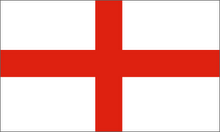
Having posted a picture of the Cross of St George flying from the illuminated inner keep of Clitheroe Castle a few months ago, I doubted that I would ever find a better image of our national flag, hence the absence of any further photos in what was, until that point, a short series of such shots.
I still think that shot is the best one I'll ever take, but the one which appears to the left runs it a very worthy second, even though this photo hardly does it justice.
As regular Thronistas may have gathered, I took it on my mobile as it dominated the skyline above the town of Settle in North Yorkshire.
In point of fact, stood at the vantage point from which I took this shot, I was spoilt for choice in terms of the sheer number of English flags I could see flying fom shops and other buildings in what is a very pleasant, old fashioned, and highly presentable English town.
Commendable.
Of course the most important one I can possibly imagine taking will be of the CoSG flying above the Palace of Westminster.
I'm really looking forward to taking that one...
Thursday, September 03, 2009
Kevin Myers and an uncomfortable truth for the English...
Uncomfortable reading, isn't it; probably because - Heaven forfend - every word is the unvarnished truth...
Michael Mansfield QC and his 'missing' Knighthood...
As I cannot link directly to that item in isolation from the rest of 'his' column - it's a pretty open secret that the name 'Ephraim Hardcastle' is a nom-de-plume for the Mail's regular columnist, Peter McKay - I'll reproduce it here in its entirety:
"Michael Mansfield QC, 67, says in his rather naffly-titled book, Memoirs of a Radical Lawyer, that, in his 1950s youth, growing up in the London suburb of Barnet, his mother 'cajoled me into joining the Young Conservatives so I could learn the quickstep and meet the right sort of girl'.
He had two wives - Melian Bordes, by whom he has five children, and documentary maker Yvette Vanson, with whom he has one.And his quickstep? Envious colleagues say few have niftier footwork when it comes to bagging lucrative criminal briefs. But why no knighthood for a QC of his eminence?
Surely it isn't being withheld because he represented the Royal Family's erstwhile friend, Mohamed Al Fayed? Mansfield says in his memoir that Prince Philip referred to Dodi Fayed as 'an oily bed-hopper'."
I don't think that's the reason at all. The reason he hasn't been honoured with a knighthood - frankly few barristers are, however eminent - is rather more straightforward; Mansfield is an avowed republican, as the following excerpt from website of ‘Republic’ The Campaign for an Elected Head of State, tends to confirm:
"The republican movement has been buoyed by Republic's recent success in challenging the oath of allegiance and launching its "Royal Finance Reform Charter". Republic's campaign is backed by many high profile republicans including Polly Toynbee and Michael Mansfield QC."
So, accepting for the purposes of this post that Mansfield is a man of principle, I would expect any self-respecting republican (a perfectly legitimate position to adopt, irrespetive of the Throne's profound disagreement with it) to reject the offer of a knighthood out of hand, or risk the accusation of hypocrisy.
Just two futher observations.
Firstly, I wonder why a 'republican' actively sought the status of Queen's Counsel; couldn't a self proclaimed socialist such as Mansfield have had just as successful and as high profile - not to mention lucrative - a career at the Bar without those two post-nominal letters, or did he seek them for the financial rewards they would bring?
And secondly, with people such as the increasingly comical Polly Toynbee and Mr Mansfield supporting the abolition of our monarchy, I'm reassured that my grandchildren will be celebrating the coronation of King William V's successsor in about seventy years' time...
Tuesday, September 01, 2009
Kevin Myers, 'Irish' America and Irish Shibboleths...
One of the reasons for that, in addition to his highly readable style, is his preparedness to write potentially unpopular articles, a number of which I have linked to here in the past.
True to form, his latest column attacks what he describes as "the national addiction for a tale of oppression, " based on the reaction to the death of (the unlamented) EM Kennedy, whilst simultaneously firing a broadside at 'Irish' America.
I recommend that you read it in its entirety.
Tuesday, August 18, 2009
More football predictions...
But before I give you my predicted final placings, I thought it would be appropriate to write a little about each team to demonstrate my thinking. I doing so, I have broken the twenty clubs down into four groups, the Lancastrians, the Midlanders, the Londoners and the Odds and Sods.
As I noted at the end of last season, teams based in Lancashire now constitute 40% of the Premier League. However, I see this season as being something of a variation on the theme of the Curate’s Egg for the Red Rose members, with some enjoying good, successful seasons and the others potentially toiling to avoid being drawn in to the relegation dog-fight. Amongst the former, of course are Manchester United and Liverpool, both of which I expect to find in the top four next May. That said, unlike many pundits (most of whom it seems to me actually played for the club!) I do not subscribe to the theory that this will be Liverpool’s season to lift the trophy. I think that the combination of the loss of Alonso and the presence of stronger teams will see that particular Holy Grail remain out of their reach for yet another year. Manchester United, on the other hand, have an unparalleled record of success in this competition in recent years and will doubtless go very close to winning it again.
United’s opponents from across Manchester, with the bounty of Sheikh Croesus behind them will also have a very good season. Quite whether that will translate into a top-four position, I am not sure, because whilst they have more strikers than Bob Crow, they look a little short in defence to me, which will always make them vulnerable to conceding goals in a way that the top four simply don’t do.
Everton will also have a good season and I expect them to qualify for the Europa League, or whatever it will be called by then, particularly if they manage to fend off the predations of Man City and hold on to Joleon Lescott.
Moving on to the other Lancastrians, I fear that newly promoted Burnley will be returning whence they came, irrespective of their putting up a good fight to retain their status. They simply do not have the team or resources to survive: sad, but true. Meanwhile, their closest neighbours and fiercest rivals, Blackburn Rovers should be well enough equipped to secure a respectable mid-table finish, given the managerial skills of Sam Allardyce. Ditto Bolton Wanderers under Gary Megson; but I have a sneaking feeling that Wigan could find this season tough going, having lost an inspirational manager in Steve Bruce and a couple of important players.
Of the Midlanders, it will not surprise any of you to learn that I expect Aston Villa to lead their particular pack. However, shorn of Gareth Barry and with their one expensive summer signing (Downing) not expected to be fit until the New Year, I doubt that they will perform as well as they did last term. Birmingham City will regard staying in the division this season as a success and I fully expect them to do so. I cannot, however say the same for Mick McCarthy’s Wolves, who I think are in danger of becoming another yo-yo club like West Brom: too good for the Championship and not good enough for the Premier League. Finally for this group, and stretching geographical boundaries to breaking point, I see Stoke City having a season similar to the one that they enjoyed last time: their home form will keep them up, together with the odd point or three they collect on their travels.
Turning to the Londoners, no one will be surprised to see that I think that both Chelsea and Arsenal will be in the top four at the end of the season. Chelsea in particular have not lost any of their marquee players (unlike their northern rivals) and must have an excellent chance of winning the League for the first time for a couple of seasons. Arsenal, meanwhile, under the shrewd, but irritating Arsene Wenger will probably just about pip Man City to fourth place – but only just. Tottenham will be a far better prospect under Harry Redknapp than they were this time last year under Juande Ramos. That said, I don’t see them squeezing into the Europa League places unless seventh place would be sufficient for them to do so. Whilst I don’t foresee any problems for them, I don’t see Fulham repeating their success of last season and a solid mid-table finish is the best they can hope for. West Ham, on the other hand, under the mercurial Zola could, repeat could, be this year’s surprise package; however their financial position could spoil what would have otherwise been a season of progress and achievement.
No relegation worries for the Londoners, then.
Sadly, I can’t say the same for all of the members of my final group, the Odds and Sods. I fear that Portsmouth could collapse both financially and in terms of their haemorrhaging players at an alarming rate. Unless their Sheikh gets his hand in his pocket and buys the club very, very soon, I can hear the Pompey chimes ringing at Championship grounds in 2010-2011. Hull City, meanwhile will once again survive by the skin of their Tiger teeth, leaving Phil Brown a couple of shades lighter than his usual mahogany. Finally, Sunderland. I have a sneaking suspicion that this could be a breakthrough season for the Black Cats: they have a new, wealthy owner, an excellent manager in Steve Bruce and a squad recently reinforced by some quality players, such as Darren Bent. There will be no relegation worries at the Stadium of Light this year – far from it.
So, this is how I see the final league table next May:
1. Chelsea
2. Manchester Utd
3. Liverpool
4. Arsenal
5. Manchester City
6. Everton
7. Spurs
8. Aston Villa
9. West Ham
10. Sunderland
11. Fulham
12. Blackburn Rovers
13. Bolton Wanderers
14. Stoke City
15. Wigan Athletic
16. Birmingham City
17. Hull City
18. Wolves
19. Portsmouth
20. Burnley
Will I be as successful with my predictions as I was last season?
We will find out next May and once again, I will hold myself up to potential ridicule by comparing those predictions with what really happened…
Friday, August 14, 2009
How are the (self-supposed) mighty fallen...
Just fifteen short months ago, footballer David Bentley, then of Blackburn Rovers, had the world at his undoubtedly talented feet. He had just finished a successful season with his club and, having broken into the England team, was being spoken of as the 'new David Beckham'.
Those of us as interested in the back pages of the newspapers as we are in the front ones could not avoid acres of coverage, in which he explained, amongst other things, his love of DIY and how he overcame a gambling problem.
At the same time, those same articles began to mention that Bentley saw his footballing future away from Lancashire, at one of the four clubs then (and now) capable of launching a challenge for a Champions' League place, where he could also improve his international chances.
He and his agent began to openly court such a move, against the undoubtedly wiser (and possibly hypocrtical) counsel of his then manager, Mark Hughes, who, having advised him to stay at Ewood Park for at least another year, himself left the club for Manchester City and Thaksin Shinawatra's allegedly bloodstained Baht. Irrespective of that advice from a man who's pedigree was there to be respected, Bentley and his advisors believed their own publicity and the agitation for a move gathered pace.
Unfortunately for Bentley, none of the top four clubs were interested in acquiring his services, but then up popped Juande Ramos' Tottenham - the club Bentley supposedly supported as a boy - with a bid of fifteen million pounds, and the deal was swiftly done.
Indeed, by the time the transfer went through, I know a good many Blackburn fans who would have willingly taken the day off work, filled their car with petrol and driven him to London themselves, simply to rid their club of his disruptive presence.
Bentley described the transfer as his 'dream' move, but all too quickly from his perspective, the dream began to sour. For whatever reason - it is alleged that juvenile stupidity during an England get-together may have played a part - the famously professional Fabio Cappello jettisoned him from the national squad, never to return.
So far, so bad, but worse was to come. Ramos went the way of all flesh after a disastrous start to the season which saw Tottenham bottom of the league, to be replaced by everybody's favourite Cockney geezer, 'appy 'arry Redknapp, who quickly decided that Bentley had no place in his best (or indeed any) Spurs eleven and promptly dropped him.
Further humiliation was heaped on Bentley when, selected to play in the Carling Cup tie at Burnley - Blackburn Rovers nearest neighbours and fiercest rivals - he was withdrawn at half time, following a performance of quite unique incompetence.
To compound matters, from Easter onwards, Redknapp made it clear that Bentley had no future at Spurs, and was actively advising him to seek employment at another club, in order to 'rebuild' his career; the footballing equivalent of a failed X Factor audition.
So, twelve months after ignoring the advice of a man who had managed him into the England side, Bentley had lost his England place, lost his place in the Spurs team and had been told in no uncertain terms that he was surplus to requirements at White Hart Lane.
Then this happened.
Well at least he'll be able to afford a driver to take him to training whilst he serves his latest disqualification, but as I have titled this post 'how are the mighty fallen'.
I wonder if he wishes now that he'd followed Mark Hughes' advice and stayed at Blackburn for another year...
Tuesday, July 28, 2009
Two sacks, or three, Mr Heathcoat-Amory?
Whilst strolling home from my regular twice-weekly run, I spotted this sign and the accompanying, erm, pile on a country lane in Old Langho near Whalley.
Granted, it's in a reasonably well-hidden corner of the Ribble Valley, and a conservative 230 miles from his home in Somerset, but what a pity David Heathcoat-Amory MP didn't happen upon it by chance.
Just think of the trouble he might have avoided...
Friday, July 24, 2009
Steven Gerrard: acquitted and innocent...
I will not bore you all by rehearsing the points I made in those posts - the links are there for you to read at your leisure - but forgive me for reminding you that they both referred to the presumption of innocence granted to those charged with offences inthis country; a presumption which many in the press chose to virtually ignore in questioning whether Gerrard was fit to play for either his country or his club, because he had been charged with assault - a matter which was subseuently dropped before it went to trial - and affray.
Well the wheels of justice have now turned, Mr Gerrard has been tried and acquitted of that allegation.
And for those in the press who possibly wanted to see him convicted, allow me to point to the words of the trial judge, Henry Globe QC, in discharging and releasing him:
"The verdict is a credible verdict on the full facts of this case, and you walk away from this court with your reputation intact... what at first sight to the casual observer may seem to have been a clear-cut case against you of unlawful violence, has been nowhere near as clear-cut upon careful analysis of the evidence."
And that, in a couple of sentences, is why we have the presumption of innocence; because in a trial situation, when evidence is tested, it is often found to be far more opaque than it first appeared.
I wonder if all those journalists who salivated so obviously over Gerrard's arrest and subsequent trial will have the decency to print articles as large as their sensational originals in apologising to him and declaiming his innocence?
I won't hold my breath waiting for them to appear.
Wednesday, July 15, 2009
Kevin Myers on the Irish public sector...
I don't know what you think, but I wouldn't have thought that the Irish trades union movement or Irish public sector workers in general will be toasting Mr Myers' health this evening...
Do you?
Thursday, July 09, 2009
Excuses old and new and a rediscovered passion...
Put briefly, I've been very busy at work again, but in all honesty, not so busy that I couldn't have tapped out a quick post or two, had I been minded to do so; and therein lies the second reason: during my recent editing exercise, I simply got out of the habit of posting and at the same time, lost my enthusiasm for doing so, too.
As if that combination wasn't toxic enough, a further conspirator raised its head in the form of my renewed interest in the history of mediaeval England, which has seen me with my head in a book for a couple of hours most evenings, the latest of which is Marc Morris's excellent biography of Edward I, "A Great and Terrible King: Edward I and the Forging of Britain".
Those of you familiar with the Throne will have anticipated that I bridled slightly at the use of the word 'Britain' in the title of the book - Edward was king of England - but other than that admittedly minor quibble, it is a good read at 480 pages.
Now I've finished that one, I'm planning to move on to similar sized works on the life and reign of his son Edward II (red-hot poker, anyone?) and subsequently that of his grandson, the arguably even greater Edward III.
Should keep me out of trouble, whilst I attempt to recover my writing 'mojo'...
Saturday, June 20, 2009
Finished...
I may even be able to write some new ones soon...
Friday, May 29, 2009
Editing and generally tidying up...

Monday, May 25, 2009
Football predictions...How did I do?
Reproduced below are the final league placings and alongside them in red, what I had predicted:
1. Manchester United (Man United)
2. Liverpool (Chelsea)
3. Chelsea (Arsenal)
4. Arsenal (Liverpool)
5. Everton (Everton)
6. Aston Villa (Aston Villa)
7. Fulham (Portsmouth)
8. Spurs (Spurs)
9. West Ham (Sunderland)
10. Manchester City (Newcastle)
11. Wigan (Man City)
12. Stoke (West Ham)
13. Bolton (Blackburn)
14. Portsmouth (Wigan)
15. Blackburn (Bolton)
16. Sunderland (Fulham)
17. Hull (Boro)
18. Newcastle (West Brom)
19. Middlesborough (Stoke)
20. West Brom (Hull)
Well, starting with the good points, I got four out of the top eight in exactly the right position, and - allowing myself a little latitude - correctly identified seven of the clubs occupying the top eight places, with only a now rather eccentric choice of Portsmouth to finish seventh spoiling my set.
Not bad.
But before get too carried away, let's go to the opposite end of the table. Of the three clubs I tipped for the drop, only one, West Brom, was actually relegated and even then, I got their position wrong. And whilst I'm pointing out inaccuracies, I also predicted that the Baggies would be joined in the Championship next season by Stoke City, who finished a very creditable twelfth, eleven points above the relegation zone and Hull City, who survived by the skin of their teeth and one incredibly precious point.
I also have to concede that as late as the day before yesterday, I predicted that Newcastle would stay up (oh dear) at Hull's expense.
Wrong again!
Other than that, I significantly overestimated how Sunderland would fare, suggesting that they would finish ninth, whereas, of course, they were still sweating profusely on the last day of the season.
Those glaring errors aside, I think I can accurately categorise the remainder of my predictions as being 'right desert, wrong tent', missing a number of bulls' eyes by one or two places.
In fact, I actually got more of my predictions spot on than the Daily Mail's Neil Ashton, who's article prompted me to consult the Throne's murky crystal ball in the first place. He only hit the spot with two suggestions, one of which was Manchester United, which, forgive the observation, but a blind man on a galloping horse could have foreseen.
Still, I'd better not give up the day job...
Those of you not as keen on football as I am will doubtless be pleased to read - if indeed you are still reading - that there will be no more posts on the subjct until next August, when I repeat this exercise for the season 2009-2010.
Oh goody! I hear you all cry...
Well done, Burnley...
Having been by far the better side for the full ninety minutes, no-one but the most myopic Sheffield United fan could argue that Burnley didn't deserve their success on today's evidence.
So eight Lancashire clubs in next season's Premier League it is, then; there'll be a local derby every other week!
All we need now is for Preston North End to come up next season...
Saturday, May 23, 2009
The Premier League denouement...
I say six, because after the nerve-shredding tension of the battle to stave off relegation is played out on Sunday afternoon, during which two of Sunderland, Hull City (who started the season with such promise), Newcastle United and Middlesborough will fall through the trap door into the relative oblivion of the Championship, comes the play-off final for promotion to the untold wealth of the Premier League.
Turning first to the battle to avoid relegation, it would appear that barring an entirely unlikely set of freak results, in which they would have to win, whilst all the others lost and in the process make up a deficit of five in terms of their goal difference, Middlesborough will be plying their trade in the second tier of English football next year.
So far so predictable.
But then comes the battle between the remaining three clubs, Sunderland, Hull and Newcastle to avoid the final berth on football’s Titanic. Whichever one of them eventually hits the iceberg, it will be a dark day for football in the north east, because all three of the combatants are from that part of the country. Yes, I know that when people refer to the north east, they are generally speaking about an area starting in Newcastle and ranging as far south as Middlesborough, but on what reading of geography is the city of Hull not in the north east of England?
For what it’s worth, gazing into the Throne’s rather murky crystal ball, I think that Newcastle and Sunderland will escape the drop by the skin of their teeth, whilst Hull will join Middlesborough and West Bromwich Albion on the unwanted journey south.
Meanwhile, on Monday afternoon, a game of at least equal, if not greater, importance will kick off at 4.00pm at Wembley.
That match is, of course, the Championship play-off final between Sheffield United and Burnley, with the victors securing a place in next season’s Premier League and with it the trifling matter of £50 million pounds or so of television money.
Living where I do, I know a good many Burnley supporters (more just recently than ever before; I wonder why…) and contrary to popular belief, very few of them eat bananas with their feet.
Interestingly, if Burnley are successful, they will become the eighth Lancashire club in the Premier League (0r 40% of its membership), joining near neighbours Blackburn Rovers, Bolton Wanderers, Wigan Athletic and the two Manchester and Liverpool clubs in the elite of English football.
What a contrast those riches would be in comparison to the footballing wilderness which is Yorkshire and the north east of England in general.
Fortunately, I will be watching all of those issues unravel as a neutral, but I dare say, having seen my club in both relegation danger and in the play-offs in previous years, that nerves are jangling tonight in those six towns and cities in northern England.
On a slightly different tack, those of you with longer memories may remember that on 12th August last year, I posted an item in which I predicted the way the Premier League table would look at the end of the season.
On Monday, I propose to hold my pundit status up to ridicule by comparing my predictions with what actually happened.
I can hear the gales of laughter already…
Thursday, May 21, 2009
The prosecution of Ali Dizaei: a game of high stakes
Regular readers will be familiar with the stance adopted by the Throne in respect of those charged with criminal offences: all of them - whoever they are, however famous, or even notorious -are entitled to the presumption of innocence until such time that their guilt - if such is the finding of the court - is established beyond reasonable doubt. This, of course extends to Mr Dizaei every bit as much as it did to Steven Gerrard, about whom I wrote when he was arrested and charged with offences earlier this year.
As such, and with the matter now sub-judice, I do not propose to offer any further comment on the case itself; but there are one or two issues arising from it which do merit further discussion.
Firstly, I am sure that the decision to prosecute such a high profile individual - Dizaei is both the President and legal advisor to the openly activist Black Police Association, and as a Metropolitan Police Commander one of the most senior police officers in the country - was not taken lightly. Indeed, I'm absolutely sure that the lawyer responsible for deciding in favour of his prosecution, Gaon Hart, will have agonised over it endlessly. Only time and due process will show whether that decision was justified and we must await the final result of the prosecution to make that assessment.
Secondly, if I were Nick Hardwick, the Chair(man) of the Independent Police Complaints Commission (IPCC), I would have sought the most cast-iron assurances possible from the team which investigated the case against Dizaei that they had left no stone unturned in their search for evidence. Because, and make no mistake about it, if the IPCC investigation comes up short, the resulting enquiry will be very uncomfortable indeed for Hardwick, who might even find his position untenable if the enquiry is severely criticised.
Thirdly, of course, this is a high-stakes case for the Metropolitan Police; a fact which will not have been lost on its Commissioner, Sir Paul Stephenson and the entirety of his command team, because not only was Dizaei acquitted the last time the Met investigated him, but as a consequnce of that acquittal, they agreed to pay him several tens of thousands of pounds and promote him to the rank of Chief Superintendent in order to persuade him not to sue them and to smooth his way back into the force.
If he were to be acquitted a second time, I shudder to think what the settlement 'price' would be; I just hope Her Majesty the Queen is still enjoying her normal, robust good health at the time, or his eyes might even alight on her position.
More seriously, though, I'm sure that the attitude of the BPA, as expressed by Alfred John, the Chair(man) of the London branch, who described the decision to prosecute Dizaei as 'outrageous' and 'the result of personal vendettas' is already causing Sir Paul more than a little concern, for reasons so obvious that I needn't waste my time by recording them here.
All in all, then, a game of high stakes for all involved; from Dizaei himself, who will face professional ruin if convicted, to the IPCC and CPS, who will face severe (and potentially career-ending) criticism if their work is found to be of a less than excellent standard and to the BPA which faces the potential embarrassment of the conviction of a man who is not only their national president and legal advisor, but in many ways the 'face' of their organisation and finally, the Metropolitan Police who will have a significant issue on their hands, whatever the verdict.
A game of high stakes indeed.